
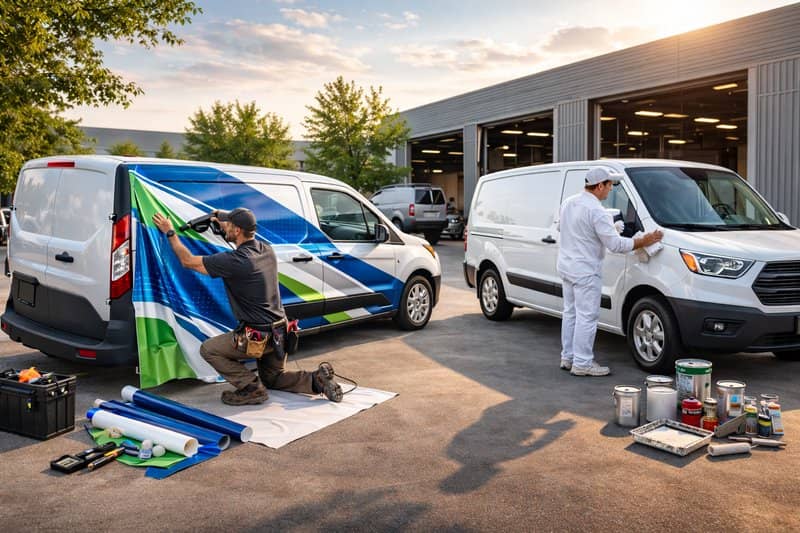
Commercial Vehicles: Vinyl Wrapping vs. Painting
If you operate a commercial fleet, you’ll eventually have to decide between traditional paint jobs and vinyl wrapping for your vehicles’ appearance. And because your trucks and vans are primarily working assets, the better option for you is the one that best supports your business realities. To compare apples to apples, here’s what you need to know about the differences in cost, installation time, and durability between the two options.
Upfront Cost
Most fleet owners use the installation cost as the first deciding factor when comparing vinyl wrapping and paint. The exact price varies by vehicle size and material quality. However, you can expect to pay several thousand dollars for either option.
Vinyl wrapping for commercial vehicles stands out for its more predictable pricing. Even when your design includes logos, patterns, detailed graphics, or various models to wrap, commercial wrap installers can accurately estimate the cost upfront.
Paint jobs, on the other hand, vary widely in price. Custom colors or brand elements can quickly increase costs. Painting also requires more prep work, so you may end up paying more than anticipated if your vehicles have rust or dents to address.
Overall, vinyl wraps have a lower and more predictable upfront cost than paint.
Installation Time and Vehicle Downtime
When your vehicles generate revenue or support daily operations, installation time costs your business. And if you manage multiple vehicles, downtime compounds into scheduling challenges and lost productivity.
Vinyl wrapping is known for its fast turnaround. Commercial fleet wrap installers know businesses need to protect productivity, so they stagger installations across fleets. Plus, many installation experts can finish a vehicle in a few days. This efficiency allows you to maintain operations and quickly return your vehicles to service.
Painting takes significantly longer. Preparation, priming, painting, drying, and curing often take one to two weeks off the road. Additionally, most painters can accommodate only one vehicle at a time. They would struggle to complete a fleet in a short time frame.
Vinyl wraps offer the shortest installation time and minimize downtime for your fleet.
Durability in Real-World Conditions
Durability refers to how well your investment holds up over time, how much repairs cost, and how the treatment impacts the assets’ value. Rather than just choosing the cheapest initial cost, consider how that cost compares over the life of the paint job or wrap.
Lifespan
High-quality vinyl wraps typically last five to seven years. They resist fading and minor scratches, though exposure to extreme temperatures, excessive UV rays, stiff brushes, and harsh chemicals can shorten their lifespan.
Quality paint jobs can last more than 10 years under ideal conditions, and the elements that damage vinyl also damage vehicle paint. Paint also shows chips, scratches, and fading more visibly than wraps.
Maintenance and Repair
Vinyl wraps are easy to clean using gentle washing methods and stand up to typical wear. Because minor damage stays localized to your wrap, you can replace a single section without spending time or money redoing the entire vehicle. This targeted repair process makes it easier to maintain a clean, professional appearance throughout the life of the wrap.
Maintaining a clean paint job often requires more repairs, as it doesn’t withstand minor damage as well as vinyl. And each trip to the paint shop can take significant time and money. Paint repairs often require blending surrounding areas to match color and finish, and repainting entire panels. Over the life of a commercial vehicle, those repairs can add up, especially if you operate in high-traffic or rugged environments.
Original Paint and Resale Value
Vinyl wrapping acts as a protective layer over your vehicle’s factory paint. Commercial wrap experts can remove the vinyl later, leaving the paint in a better condition for selling or trading. Because it’s not a permanent change and it protects the asset, lenders and car dealers typically approve wrapped vehicles for financing or leasing.
Paint, however, permanently changes the surface. That means you cannot paint any leased vehicles. Also, dealers lower your trade-in value to repaint your fleet. While a quality paint job can look great, it does not offer the same level of reversible protection.
In general, vinyl wrapping offers better protection, lower maintenance costs, and comparable lifetime pricing to paint. A commercial wrap is the more durable, flexible option for commercial vehicles.
Brand Flexibility and Updates
Businesses evolve, and your branding often changes as you grow. How frequently and extensively you want to update your fleet is an essential factor in deciding between vinyl wraps and paint jobs.
Vinyl wrapping is a removable material. You can update colors or design elements by replacing certain panels. You can also remove and rewrap the entire vehicle for a fresh look without damaging your asset.
Paint locks you into a design for the long term. You can repaint a section, but you’ll still face the same difficulties matching colors as with repairs. And repainting to update branding costs just as much time and money as your original job.
If you anticipate rebranding soon or seasonal changes to your visuals, vinyl wrapping gives you more freedom for less money.
Consistency Across Vehicles
When you manage multiple vehicles, you want a cohesive appearance across your fleet. Mismatched colors and awkward logo placements undermine your brand. So how do vinyl wraps and paint jobs stand up to jobs with more than one vehicle?
Vinyl wraps offer extreme consistency thanks to digital design tools and standardized printing. Custom fleet wrap experts use blueprints based on the make and model to fit your specific designs to each van, truck, bus, and car. And they save your brand information, so new additions have the same look as previously wrapped vehicles.
It’s tough to replicate the exact look across vehicles with paint. Painters don’t have the same digital tools to plan for various models or match brand colors. Each job comes down to the installer’s eye and skill. It’s a labor-intensive and unpredictable process.
For businesses with multiple vehicle types or growing fleets, vinyl wrapping offers greater consistency.
Vinyl Wrapping Supports Real Businesses
The right choice for your vehicles’ appearance ultimately comes down to your needs. If you have a single corporate vehicle and a permanent look in mind, then paint might deliver the long-lasting option you need.
Vinyl wrapping provides faster installation and lower upfront costs. It supports changing branding goals across multiple vehicles and minimizes repair costs. When cost, time, durability, flexibility, and consistency matter, vinyl wrapping is the standout option.



