
Design Your Bus Wraps to Align with Your Brand and Routes in Utah
Effective bus wrap design makes every trip an opportunity to reinforce recognition and message recall. It integrates your brand’s identity with the routes your buses travel every day, whether you drive the bustling streets of downtown Salt Lake City or the scenic route through the Provo and Alpine, Utah, communities.
To design a bus wrap that performs well in Utah, it helps to focus on three key considerations: how people see your vehicles, how the design reflects your brand identity, and how your buses travel through different routes and environments.
Understand How People See Your Bus Wraps
Many types of viewers encounter your bus along its route. Pedestrians see wraps at close range. Drivers or passengers in other vehicles view them from varying distances. Shoppers and workers at stores and restaurants spot your buses from across parking lots and roads.
By thinking about how people encounter your bus, you make every moment on the road count. Good design combines eye-catching elements with readable messaging and strategically positions vital information to maximize your bus wrap’s effectiveness.
Balance Simplicity and Impact
A successful bus wrap design emphasizes simplicity and clarity. Since your buses are typically in motion, people have just a few seconds to process what they see. A thoughtful design strategy respects both the viewer’s time and the brand’s goals.
Stick to clean lines, straightforward typography, your logo, a concise tagline, and a memorable visual or color concept rather than complex layouts. This clarity ensures that your message lands quickly.
But you also need to balance simplicity with impact. You want your bus to catch everyone’s attention while it’s on the road. A purposeful use of bold colors or a unique finish can make your vinyl wrap stand out without compromising its readability.
Strategically Position Key Information
Where you place contact info, taglines, company names, or a call to action matters. Effective bus wraps use visual hierarchy to guide the viewer’s eye to key information. Logos and primary branding should be larger and paired with stronger visual cues than taglines or social icons. This hierarchy makes your message more effective in fast-paced situations.
On a bus, specifically, you have to plan your visual flow around the vehicle’s features. Signs near doors or windows may get lost in reflections or blend into the safety labels and operational markings people expect to see on buses. Stage your most important design elements in central areas with uninterrupted space to help viewers absorb your core message.
Also consider how easy it is for someone to remember or jot down your information after a glance. Then focus on what’s most essential and package it for memorability. If your goal is to increase phone calls, include a short phone number. Or if you want to drive more business to your website, integrate a simple URL or QR code into your bus wrap.
By designing your bus wrap based on visual hierarchy, vehicle features, key company information, and memorability, you maximize your potential on the road.
Align Your Visual Design With Your Brand Identity
Your brand has its own personality, which you express through colors, logo, font styles, and messaging. A bus wrap should carry that identity forward. By including vinyl wraps in your marketing campaigns and making your designs consistently recognizable, your buses create a greater visual impact that supports your brand.
Integrate Bus Wraps into Your Marketing Plans
Bus wraps work best as part of a cohesive marketing plan. The visual identity of your website, office door, business cards, employee uniforms, social media, and billboards should match your wrap designs.
Alignment across channels strengthens your brand presence. When someone spots your distinctive blue-and-orange bus by Utah Lake and then encounters the same color scheme on a flyer for your transit company, they feel greater confidence in your services. People trust brands that consistently look and feel the same in digital, print, or physical environments.
Including wraps in your plans is especially effective for targeted marketing campaigns. If you’re promoting a special route to the Tulip Festival at Thanksgiving Point on social media, you could wrap your commercial buses in Utah County with tulip motifs and a URL that leads directly to the related post. As those buses travel their normal routes, your campaign reaches a much wider audience.
Build Recognition Through Consistency
Repetition is one of the most significant advantages of wrapping your buses. When vehicles run the same routes every day, residents and commuters see the same branding again and again. Over time, those repeated impressions make your business familiar long before someone ever needs your services.
Consistent fleet bus wraps turn those daily sightings into lasting recognition. Instead of encountering your brand once through an advertisement, people see it as part of their routine, whether during their morning commute, outside a grocery store, or while waiting at an intersection.
Imagine someone seeing a bus with a flying seagull on it every morning on their way to work in Salt Lake City (SLC). When they later notice the same image on a bus in Draper, they don’t have to guess which company it represents. The symbol has already become a visual shortcut for your brand.
Over time, that consistency builds more than simple recognition. Familiar brands tend to feel more established and trustworthy. As your buses repeatedly appear along the same routes, your logo and message become part of the community’s visual landscape.
That familiarity pays off when people start looking for transportation options. Instead of searching from scratch, they often remember the company they’ve seen on the road for months or years. When neighbors ask for recommendations, the brand they recognize first is the one most likely to be mentioned.
Coordinate Bus Wrap Designs for Your Utah Routes
Context matters for marketing. You want your colors and images to resonate with your audiences. But you also don’t want to get lost in the crowd. Respecting the visual environment means considering the practical and social factors for your buses before designing your wraps.
Respect the Visual Environment
Each route crosses slightly different terrain and faces unique traffic patterns, so the viewing time for your bus wrap varies depending on where it drives. Designing wraps for the physical environment your buses travel in makes them more impactful.
Buses that circulate through urban centers face high traffic patterns and competing advertisements on store signs and billboards. These routes through the city often benefit from sharper, simpler visuals because viewers have less time to engage. Fleet bus wraps in SLC, for example, can use clean text and bold patterns to pop amid traffic.
However, vehicles that travel longer commuter routes on the freeway face totally different visual environments. These long-haul routes offer steadier exposure with fewer competing visuals, allowing for storytelling elements or more detailed information. Drivers appreciate the new and interesting designs in relatively plain environments.
Incorporate Local Touchpoints
When your design reflects elements familiar to Utah residents, your buses connect with your audience. Subtle references to landmarks, regional color palettes, cultural motifs, or local teams root your wrap and brand in the community.
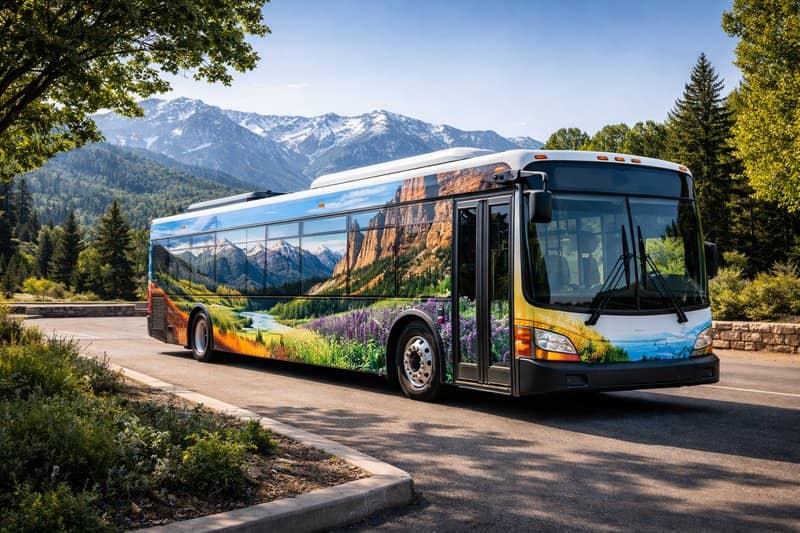
For example, a mountain-bound route in Utah could include images depicting the journey from the red rocks of St. George to the snowy peaks of Park City, integrating the wrap design with recognizable natural landmarks. Or a downtown shuttle bus could incorporate purple and black color schemes to hint at support for the Jazz. When the visuals reflect local life, people feel seen and more connected to your brand.
Designs to Stand Out in Utah
When you align bus wrap design with your brand standards and the environments your routes travel through, your visual strategy resonates with your audience. And in Utah’s diverse transit landscape, a connective approach helps you stand out from the competition and on the road.



