5 Materials You’ll Find in High-Quality Bus Vinyl Wraps
A bus wrap lives a tougher life than a typical passenger vehicle wrap. It spends more hours on the road, covers a larger surface area, requires more maintenance, and advertises farther away. Bus wraps work hard.
When choosing a bus vinyl wrap, picking high-quality materials maximizes your investment. The vinyl film, adhesive, laminates, inks, and finishes all influence how well the wrap holds up across your fleet and how long it maintains its appearance. Using top-notch materials at every installation point creates a protective layer that keeps your bus looking sharp for years.
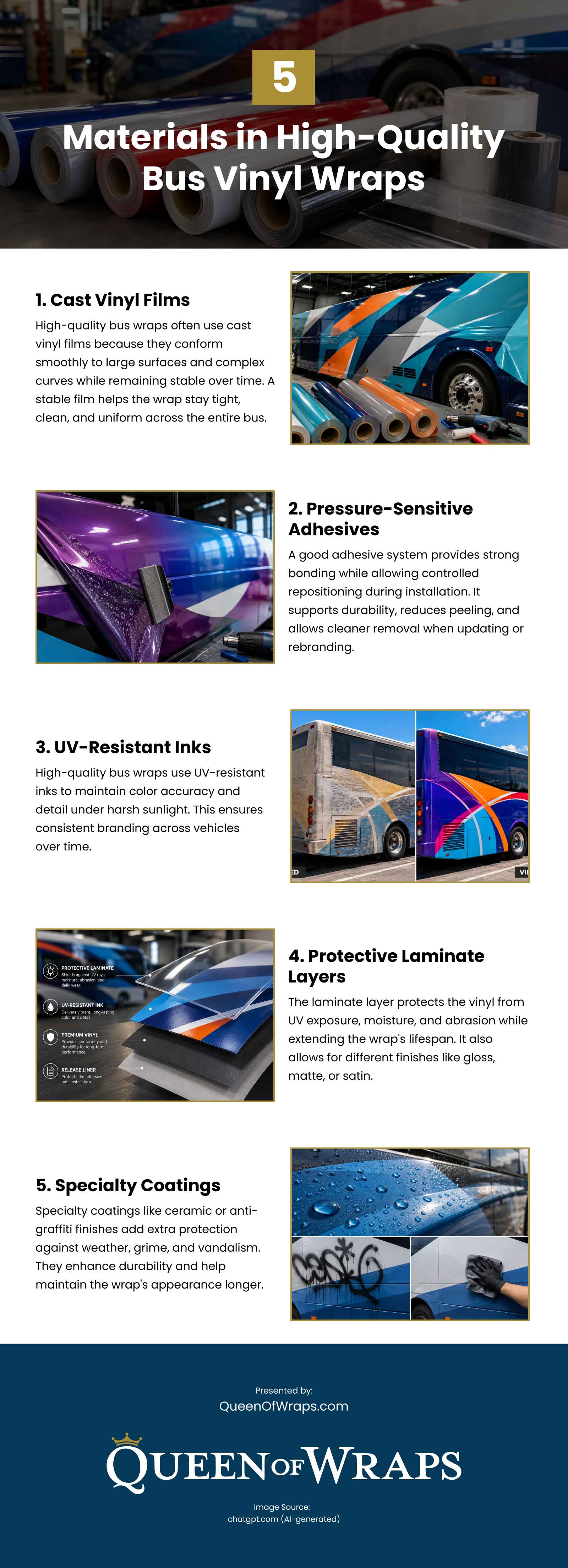
1. Cast Vinyl Films
High-quality bus wraps often use cast vinyl films. Cast films conform smoothly to large surfaces and complex curves while remaining stable over time. Bus panels are large, and wraps must span seams, contours, and hardware. That demands a vinyl built to handle every edge.
Cast films also remain stable through exposure to the elements. Lower-grade options can shrink after seasons of hot and cold or repeated cleaning. This shrinking can expose seams, create visible gaps, lift away from door frames and trim, and lead to more tears. A stable film, like cast vinyl, helps the wrap stay tight and clean.
Choosing cast vinyl supports cleaner installs and reduces the need for repairs. It can keep your wrap looking uniform across the entire bus for longer than cheaper options.
2. Pressure-Sensitive Adhesives
A long-lasting vinyl wrap depends heavily on the adhesive. A good adhesive system provides strong bonding across the entire surface, including high-stress areas such as edges, doors, windows, and trim. It reduces the risk of early peeling.
High-quality bus wraps often use advanced pressure-sensitive adhesives. These products bond securely to the vehicle while allowing controlled repositioning during installation. Because the large bus panels require precise alignment without creases or trapped air, it helps to have an adhesive that allows commercial vehicle wrap experts to adjust as needed without compromising the long-term durability.
A pressure-sensitive adhesive can also support your plans to update or remove the wrap later. High-quality bonding systems reduce the likelihood of leaving behind residue and support a cleaner removal. So when you want to rebrand or resell your bus, the surface underneath is ready.
3. UV-Resistant Inks
Ink type determines how long your graphics stay sharp and consistent. When ink quality is poor, you might notice uneven color shifts or reduced contrast around the finer details.
High-quality bus wraps typically print with UV-resistant inks. These products retain color better in harsh outdoor conditions than standard options. Ink durability matters for a long-term brand since buses spend long hours under direct sunlight.
Ink quality is especially important for bus fleets and designs that include fine details or color-sensitive elements. These brand components are the first to fade. And when the printed elements age differently across your vehicles, you lose the power of a consistent fleet look. Sun-stable inks help your wrap stay accurate to your brand standards over time and across buses.
4. Protective Laminate Layers
The laminate layer sits on top of the printed graphics and protects the vinyl from UV exposure, moisture, mild abrasion, and frequent washing. It is the wrap’s protective shield. A high-quality laminate adds a little thickness to your vinyl wrap, providing resistance to the elements.
Buses go through a lot of cleaning and weather cycles. The laminate helps the vinyl and adhesive handle that routine without breaking down. Laminates also come in gloss, satin, matte, or textured finishes, which change your bus’s appearance. You can choose the finish that supports your brand and protects your bus.
The layering effect really comes into play with laminates. A high-quality protective layer helps UV-resistant ink keep your colors and graphics stable for longer. And because the laminate bonds directly to the vinyl, a poor-quality film can cause peeling and lifting, even over premium vinyl and adhesive.
Once you’ve committed to high-quality materials, you don’t want to skimp on the shield. Using a weather- and UV-resistant laminate significantly increases the overall durability and lifespan of your bus wrap.
5. Specialty Coatings
While a specialty finish is not required, adding a high-quality coating over the laminate can enhance the specific protection your bus wrap needs for your location and goals.
A ceramic coating is a liquid polymer that bonds to the laminate’s surface to repel water more effectively and resist road grime and chemicals. Adding a ceramic coating to fleet bus wraps in Utah County, for example, could reduce maintenance costs and extend the wrap’s lifespan in snowy weather.
An anti-graffiti clear coating could also be effective for your bus fleet. Applying this product allows paint, markers, and stickers to clean off more easily. It adds another layer of protection so scratches don’t rip the vinyl. This anti-graffiti clear coating can keep public transit buses, frequent targets of vandalism, looking nicer for longer.
When you’ve invested in high-quality layers for your wrap, adding a specialty coating may not be necessary. However, it provides personalized protection for your investment, so your vinyl bus wrap meets your needs for years to come.
Performance-Based Wraps
A bus wrap is only as strong as the materials behind it. Cast vinyl films, reliable adhesives, protective laminates, UV-resistant inks, and specialty coatings work together to keep your wrap sharp and durable for years of daily use.
You don’t need to memorize product names or industry jargon to make smart decisions about your wrap’s quality. Focus on materials that align with how you use your buses, and you’ll make decisions that support your brand quality, maintenance expectations, fleet consistency, and long-term value.
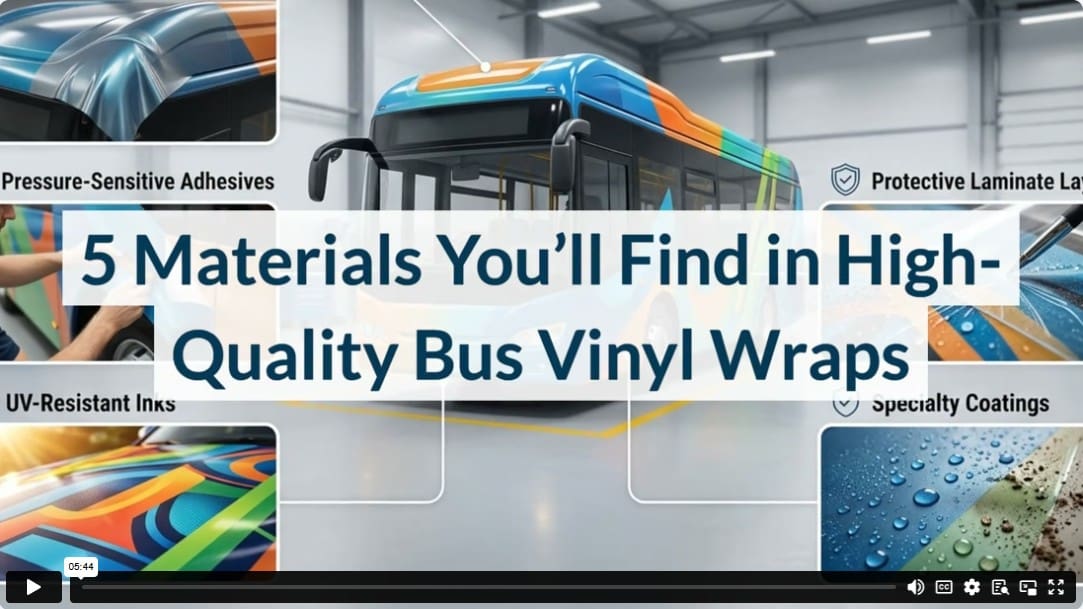
Video
Infographic
Choosing high‑quality materials for a bus vinyl wrap is essential for durability, protection, and maintaining a consistent professional look across your fleet. Take a look at this infographic to learn about the best materials for long‑lasting, high‑performance bus wraps.