
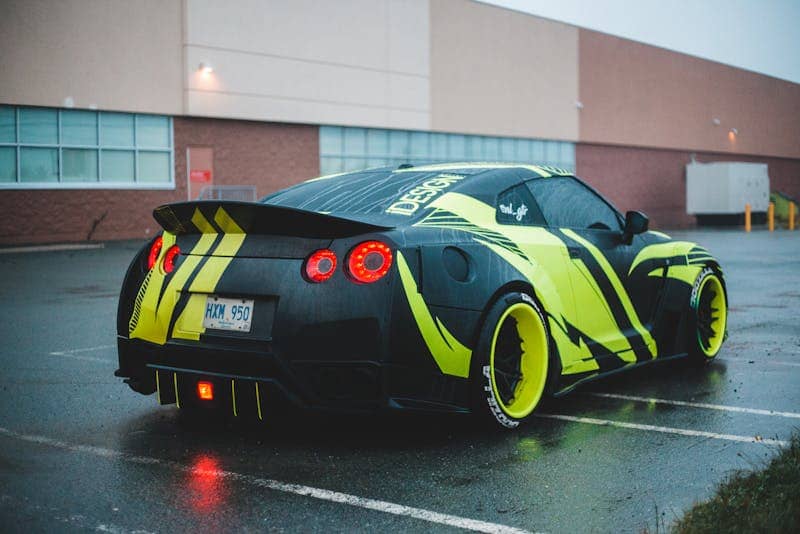
Balancing Price and Quality for Business Car Wraps
If you are shopping for a business car wrap, price usually grabs your attention first. But if cost is your only filter, you aren’t considering the wrap’s cost over its life or its value to your business. A smart wrap decision balances price and quality to fit your budget and meet your needs.
Chasing the Lowest or Highest Price Doesn’t Work
It’s tempting to chase the lowest price for your business wrap. When installers have to cut costs to stay below competitors, it usually means cutting corners somewhere. They might reduce their materials costs by printing with less vibrant inks or wrapping with lower-grade vinyl. Or they might rush prep work and installation to lower their payroll costs.
Any of those shortcuts can lead to early peeling, fading, bubbling, or lifting. When that happens, you’re losing money. Reprint and reinstall costs add to the toll on your operation from taking the vehicle out of service again. A year down the road, the cheapest option costs you more.
A high quote doesn’t guarantee quality, either. Some shops charge premium prices based on reputation or location, yet deliver wraps that don’t last or perform well. Others may upsell features, like ultra-premium finishes or a full wrap, when your business only needs a simple option.
Letting Long-Term Value Guide Your Decision
Instead of letting price guide the conversation, think in terms of lifespan and impact. Ideally, you can find the best quality materials and installation so that your wrap sends the right message and lasts as long as you need it to.
Prioritizing Quality
A high-quality wrap that improves your company’s appearance helps pay for itself. A business car wrap creates visibility, reinforces recognition, attracts leads, and shapes public perception. If your fleet looks sharp and stays that way, it helps you. If it looks tired and unprofessional, it works against you.
The same logic applies to downtime. A quality wrap keeps your car in service, prevents repeat appointments, and protects your schedule, revenue, and brand. That’s why wrap quality belongs in the same conversation as price. Cutting corners on design, materials, prep work, or installation to save money upfront tends to cost more over time: in repairs, replacements, and the subtler cost of a fleet that no longer looks the part.
Choosing quality does not mean ignoring budget. In some cases, a simpler design with stronger materials makes more sense than a larger, cheaper job that falls apart quickly. Or a high-quality partial wrap may give you the right blend of cost control and professional branding. But prioritizing quality over price ensures that your corporate car wrap sends the right message.
Consider the Lifespan
A wrap that lasts longer and holds its appearance better delivers greater value, even if the upfront cost is higher. A high-quality wrap can last between three and seven years. If you pay $4,000 for a wrap that lasts five years, that’s $800 a year. That is considerably cheaper than paying for a rewrap every 12 months.
As a marketing asset, you also need to consider your vehicle wrap’s cost per impression. TV commercials, online ads, radio spots, or printed flyers typically require monthly or weekly payments to continue running. For a one-time investment that continually promotes your brand, a car wrap is much more cost-effective.
Your wrap’s lifespan should reflect your business needs. If you change your commercial, promotional fleet wraps for major events, your vinyl might be an 18-month investment. Paying more money for a wrap to last seven years doesn’t make sense for your company. Businesses that rotate vehicles or rebrand often can balance that need with cost for a wrap that lasts as long as they need it to.
Sticking to Your Budget
Once you know your quality and lifespan requirements, comparing prices becomes a more focused exercise. You’re no longer looking at every quote on the table; you’re evaluating the options that best meet your needs.
Even within that narrowed field, you may need to make tradeoffs to hit your number. Some areas of a wrap carry too much risk to cut corners on. Prioritize these regardless of budget pressure:
- An intentional, impactful visual design
- Your core branding elements
- The wrap installer’s level of experience
- Quality materials for high-stress areas like edges, recesses, and seams
- Sufficient surface prep and installation time
Skimping in these areas tends to create visible problems quickly. It ends up costing more to fix than the original savings were worth.
There are places, though, where you can adjust without hurting performance. If you need to bring the investment closer to your budget, consider these options:
- Simplifying your design
- Using your in-house branding team for design work
- Reducing coverage strategically
- Using the same template across your fleet
- Incorporating interchangeable panels for elements that change
- Skipping specialty finishes
- Paying for the vinyl lifespan you actually need rather than the longest available
- Scheduling installation during your off-season, when shops may have more flexibility
None of these adjustments requires sacrificing the integrity of your wrap. A gloss finish, for instance, can save you several hundred dollars over a chrome one and still look sharp and on-brand. The goal is to protect what makes your wrap work while finding flexibility everywhere else.



