
How We Build One Wrap to Survive a Utah Winter and a Nevada Summer
The Direct Answer
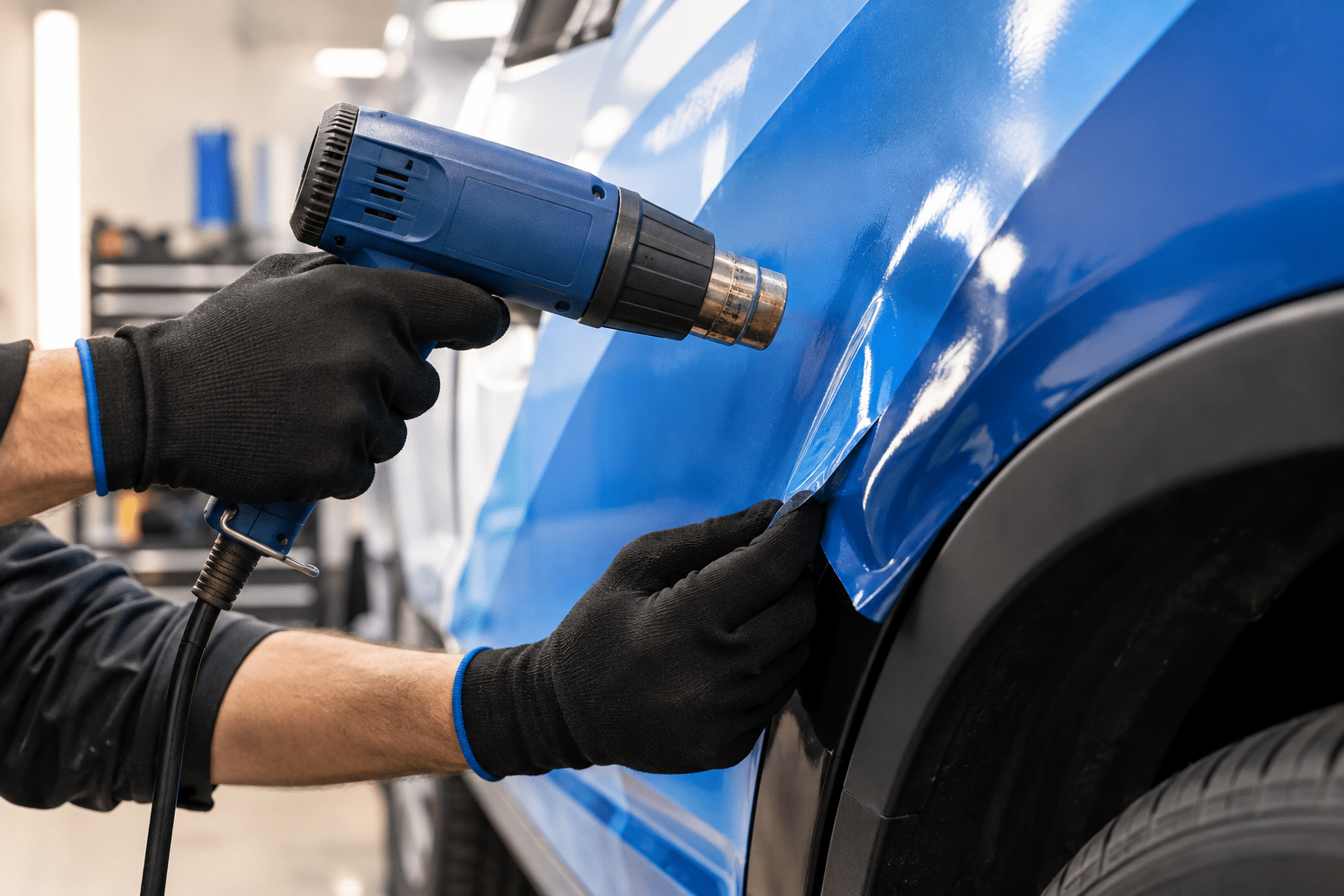
One process handles both. We use cast vinyl, install it within a controlled temperature range, and verify every post-heat with an infrared thermometer instead of a guess. That’s the same wrap, the same materials, and the same install standard in Salt Lake City, Las Vegas, and Reno.
Two things actually threaten vehicle wrap durability in this region, and they’re opposite problems. Salt Lake City winters regularly drop below freezing for weeks at a stretch, causing freeze-thaw cycling. Las Vegas summers push surface temperatures past 115°F, causing sustained heat and UV exposure.
Reno sits in between, with genuine four-season swings rather than one dominant climate problem. All three trace back to the same underlying material question, which is why one process handles all of them instead of requiring a different approach for each city.
Freeze-Thaw: The Mechanism, Then Our Answer

Freeze-thaw cycling breaks a wrap at the edges first, not the middle. Cheaper vinyl is made by rolling and stretching the material under heat and pressure, leaving stored tension inside the film. Repeated cold-and-heat cycling reactivates that tension, and the vinyl slowly tries to spring back to its original flat shape. The result is lifting and cracking, almost always starting at edges, seams, and recessed areas where the material was stretched the most during installation.
Our answer starts with the material: we use cast vinyl, not calendered vinyl. Cast vinyl is made by casting molten material into a flat sheet rather than rolling it, so it comes out with a relaxed, stress-free structure from the start. No stored tension reacts when temperatures swing.
Material alone isn’t the whole answer. We post-heat every edge, recess, and stretched area after installation, reheating to 175–195°F so the vinyl can fully relax and bond instead of sitting under tension. We verify that temperature with an infrared thermometer during the process, since that range runs hot enough that estimating it by feel isn’t reliable.
Heat & UV: The Mechanism, Then Our Answer

Heat and UV break a wrap two different ways: color fading, and the same edge-lifting problem freeze-thaw causes, just triggered by heat instead of cold. A dark-colored wrap sitting in direct sun can reach a surface temperature over 130°F. That heat alone can reactivate stored tension in lesser vinyl. The same failure mode as freeze-thaw, from the opposite direction. Separately, sustained UV exposure breaks down color and finish over time in any material not built to resist it.
Our answer starts with the same material choice: cast vinyl’s relaxed molecular structure gives it genuine heat resistance and inherent UV resistance that calendered vinyl doesn’t share. That’s one material decision solving two different problems.
Installation matters here too. Apply it when the vehicle surface is between 60°F and 90°F, since installing outside that range risks a weaker bond from the start. This problem shows up months later under Nevada summer heat, not immediately.
The Close
Every wrap we install carries a 5-year product warranty and a 1-year installation warranty, in every market we serve. That number reflects the process above directly: the same cast vinyl, the same controlled installation, and the same verified post-heat, on a single HVAC van, a downtown storefront sign, or a full fleet.
This is the process behind every car wrap on our Salt Lake City, Las Vegas, and Reno vehicle wrap pages. It’s also why How Long Does a Wrap Last? and Does Wrapping a Vehicle Damage the Paint? both point back to the same underlying material and installation standard instead of repeating it here.
FAQ
What material do you use for vehicle wraps in Utah and Nevada?
Cast vinyl, specifically 3M and Avery Dennison’s wrap-grade cast films, the two brands we’re certified in. It’s made with a different manufacturing process than cheaper calendered vinyl, and that difference is why it holds up through both a Utah winter and a Nevada summer.
Why does cast vinyl handle temperature swings better than calendered vinyl?
Calendered vinyl is made by rolling and stretching the material, which leaves stored tension inside it. Temperature swings reactivate that tension, and the material tries to spring back to its original shape, causing lifting and cracking. Cast vinyl is cast from molten material instead of rolled, so it has no stored tension to reactivate.
What temperature do you post-heat a wrap to?
175°F to 195°F, applied to every edge, recess, and stretched area after installation. This relaxes the vinyl and lets the adhesive fully bond, rather than leaving the material under tension.
What temperature range do you install a wrap in?
The vehicle surface needs to be between 60°F and 90°F during application. Installing outside that range risks a weaker bond that may not show a problem for months.
Does extreme heat in Las Vegas affect a vehicle wrap?
Yes, if the material isn’t built for it. A dark-colored wrap can reach a surface temperature over 115°F in direct Las Vegas sun, which can reactivate stored tension in lower-grade vinyl and fade color in materials without real UV resistance. Cast vinyl is dimensionally stable and inherently more UV-resistant, which is why we use it.
Does cold weather in Salt Lake City cause a wrap to lift or crack?
It can, with the wrong material or installation. Freeze-thaw cycling is the single biggest cause of edge lifting and cracking in this climate. Cast vinyl plus correctly post-heated edges is the combination that prevents it.
How do you know the post-heat was done correctly?
We verify it with an infrared thermometer during the process rather than estimating by feel. The correct temperature range is high enough that eyeballing it isn’t reliable.
How long does a properly installed wrap last in this climate?
5 to 7 years for quality cast vinyl, properly installed; backed by our 5-year product warranty and 1-year installation warranty in every market we serve. See How Long Does a Wrap Last? for the full breakdown.



