
How Long Does a Vehicle Wrap Actually Last?
A professionally installed vehicle wrap using quality cast vinyl typically lasts five to seven years. That's the honest range, not a marketing number, and it holds up whether you're wrapping one company car or an entire fleet.
The harder, more useful question is what actually determines where a specific wrap falls in that range, and what happens once it gets there. That's what the rest of this covers.
What Actually Determines Lifespan
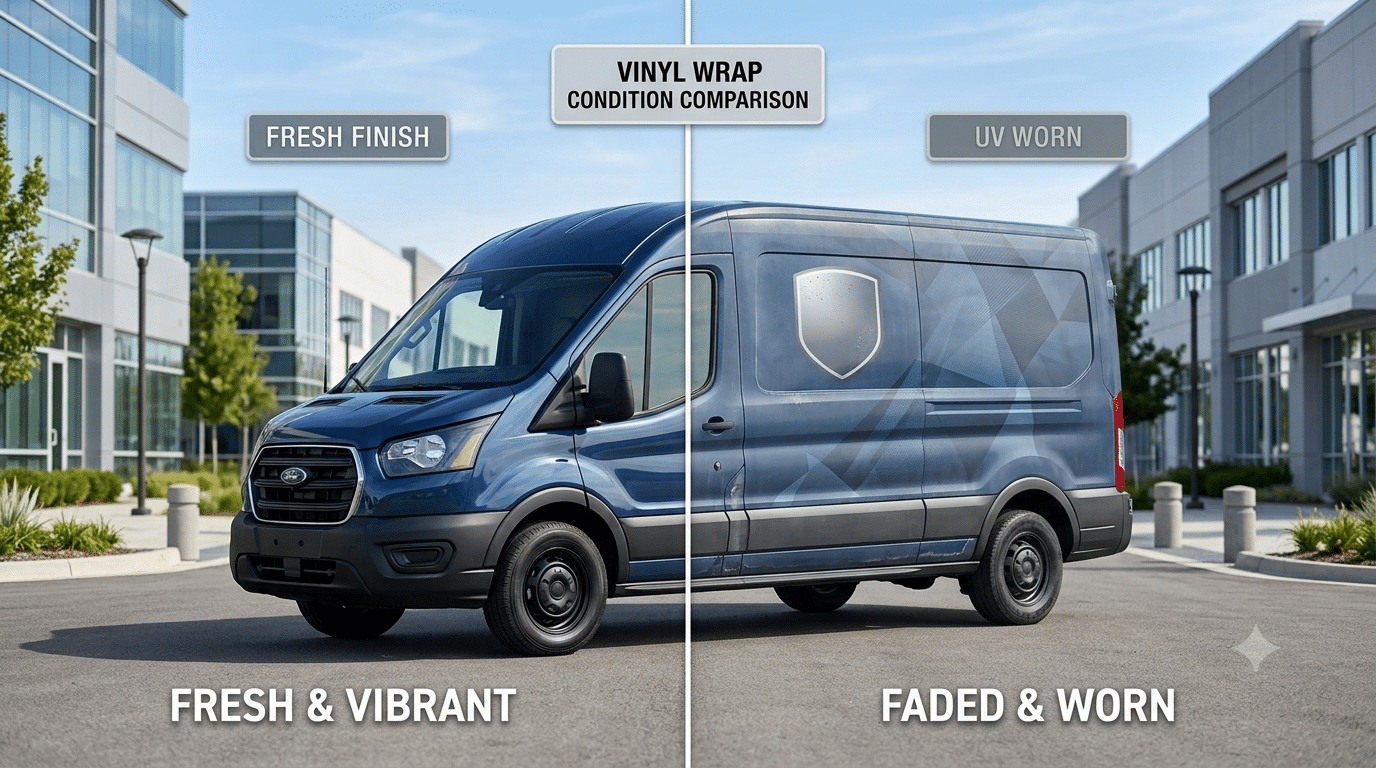
Three things decide how long a wrap actually lasts: the material, the installation, and how the vehicle is used and stored. Get all three right, and five to seven years is a realistic, often conservative estimate. Get one wrong, and a wrap can start failing in a fraction of that time.
Material quality is the biggest lever. Cast vinyl, the standard for full vehicle and fleet wraps, conforms to the curves of a modern vehicle body and resists shrinking and cracking over years of use. Calendered vinyl, a thinner and cheaper alternative, holds up for a much shorter window, often two to five years, and fades faster in high-UV conditions.
Installation quality matters just as much as the material itself. A wrap applied with proper technique, correct tension, and clean surface prep will outlast an identical material rushed onto a vehicle by someone cutting corners.
Usage and storage finish the equation. A vehicle parked outdoors year-round takes far more UV and temperature stress than one garaged overnight. For fleet vehicles logging heavy daily mileage, this factor often matters more than any other, since the vehicle simply spends more hours exposed than a personal car driven occasionally.
One detail that gets overlooked: a wrap needs roughly 48 hours after installation before you should drive it, wash it, or expose it to extreme temperatures. The vinyl and adhesive are still settling during that window, and skipping it is one of the more common reasons a wrap develops problems earlier than it should.
Vehicle Wraps built with the right material and installed correctly are designed to hit the upper end of that five-to-seven-year range, not the lower end.
How to Get the Full Lifespan Out of a Wrap

The gap between a wrap that lasts five years and one that lasts seven often comes down to care, not luck.
Hand washing is the safest way to clean a wrapped vehicle. Automatic car washes with brushes and high-pressure washers can lift edges and wear down the vinyl's finish over time, even when the wrap itself is high quality. A simple rinse, mild pH-neutral soap, and a soft cloth or mitt do the job without putting the wrap at risk.
Speed matters more than most people expect with certain stains. Bird droppings, tree sap, and bug splatter are all mildly acidic, and left on a wrap for more than a day or two, they can leave a permanent mark that no amount of washing afterward will fix. Wiping these off within 24-48 hours is a small habit that prevents a real, visible problem.
For a fleet, this isn't a per-vehicle concern; it's a policy. A quick wash-and-care routine handed to every driver protects a much larger investment across the fleet, and it costs nothing beyond a few minutes of attention.
Our Warranty, In Plain Terms
Most people assume a wrap warranty is one thing. It's actually two, and understanding the difference matters if something ever needs attention.
A product warranty covers the vinyl material itself: fading, cracking, or adhesive failure. The manufacturer backs this, and it holds as long as a certified installer installs the film correctly. A separate installation warranty covers artistry: edges lifting, bubbling, or seams separating because of how the wrap was applied, not the material itself.
Every wrap we install comes with a 5-year product warranty and a 1-year installation warranty. That breakdown isn't arbitrary. It mirrors how the industry separates material issues from installation issues, so you know exactly what's covered and by whom if a problem shows up.
What isn't covered on any wrap from any shop: physical damage like rock chips, scratches, or collision damage, and problems caused by improper washing or harsh chemicals. A wrap warranty protects against defects, not against the ordinary wear a vehicle takes on the road.
Signs a Wrap Is Reaching the End of Its Life

A wrap doesn't fail all at once. It shows a few consistent signs first:
- Fading or discoloration: UV exposure gradually breaks down the vinyl's color over years, most noticeably on horizontal surfaces that face the sun directly.
- Edge lifting: usually starting around door handles, panel seams, or the fuel door, where the wrap sees the most flexing and handling.
- Cracking or brittleness: older vinyl loses flexibility, and a wrap that cracks when the panel flexes has passed its useful life.
- Loss of finish: a matte wrap that's gone patchy-glossy, or a gloss wrap that's dulled unevenly, is a visual sign the material is aging out even before anything is technically failing.
Catching these early matters more for a fleet than for a single vehicle, which brings up a problem most single-vehicle content never has to address.
Fleet Wraps and the Consistency Problem

A single vehicle aging out of its wrap is a maintenance decision. A fleet aging out unevenly is a branding problem.
If ten trucks were wrapped over three different years, they won't all show wear at the same time. One truck starts fading first. Another develops edge lifting sooner because it's parked outdoors while the rest are garaged. Left alone, a fleet slowly drifts out of consistency, and a customer who sees three trucks from the same company on the same day may notice they no longer quite match.
The fix most fleet managers land on is a rolling rewrap schedule: replacing roughly 15-20% of the fleet's wraps each year rather than waiting for a large batch to fail at once. This keeps the whole fleet looking consistent without the cash-flow hit of rewrapping everything simultaneously, and it turns wrap replacement into a routine line item instead of an emergency.
For any commercial fleet, that planning conversation is worth having well before the first truck starts showing its age, not after.
Frequently Asked Questions
What's the difference between a vehicle wrap's product warranty and installation warranty?
The product warranty covers the vinyl material itself, things like fading, cracking, or adhesive failure that happen on their own. The installation warranty covers artistry, like edges lifting or seams separating because of how the wrap was applied. Ours run 5 years and 1 year, respectively.
Does the warranty cover fading from the sun?
Yes, premature fading is typically a material issue covered under the product warranty, provided a certified installer installed the wrap and you maintained it according to normal care guidelines.
Will the warranty cover damage from a rock chip or scratch?
No. Physical damage from road debris, scratches, or collisions. That kind of damage is treated as normal wear rather than a material or artistry defect.
What voids a vehicle wrap warranty?
The most common causes are improper washing methods, particularly high-pressure washing held too close to the vehicle, and harsh chemical cleaners not meant for vinyl. Physical damage and normal wear and tear also fall outside any warranty.
Can just one damaged panel be repaired, or does the whole wrap need replacing?
In most cases, you can repair or replace a single damaged section without redoing the entire wrap, especially on partial wraps or fleet vehicles with a consistent design on file. A full replacement is usually only necessary when the wrap has aged out broadly across the vehicle.
How does climate affect how long a wrap actually lasts?
Significantly. High-UV, high-heat climates accelerate fading and can shorten a wrap's lifespan compared to more temperate conditions. This is one reason material quality and installation matter even more in places with intense, year-round sun exposure.
Should a whole fleet be rewrapped at once, or staggered?
Staggering works better for most fleets. Rewrapping a portion of the fleet each year on a rolling schedule keeps the branding consistent across every vehicle while spreading the cost over time, rather than facing a large expense all at once when multiple wraps age out together.



