
How to Remove a Vehicle Wrap the Right Way
To remove a vehicle wrap, warm the vinyl to soften the adhesive, peel it slowly at a low angle, then clean off the leftover adhesive. This is doable at home for a smaller, newer wrap. Large, old, or brittle wraps take much longer and are harder to remove.
When should a wrap come off?
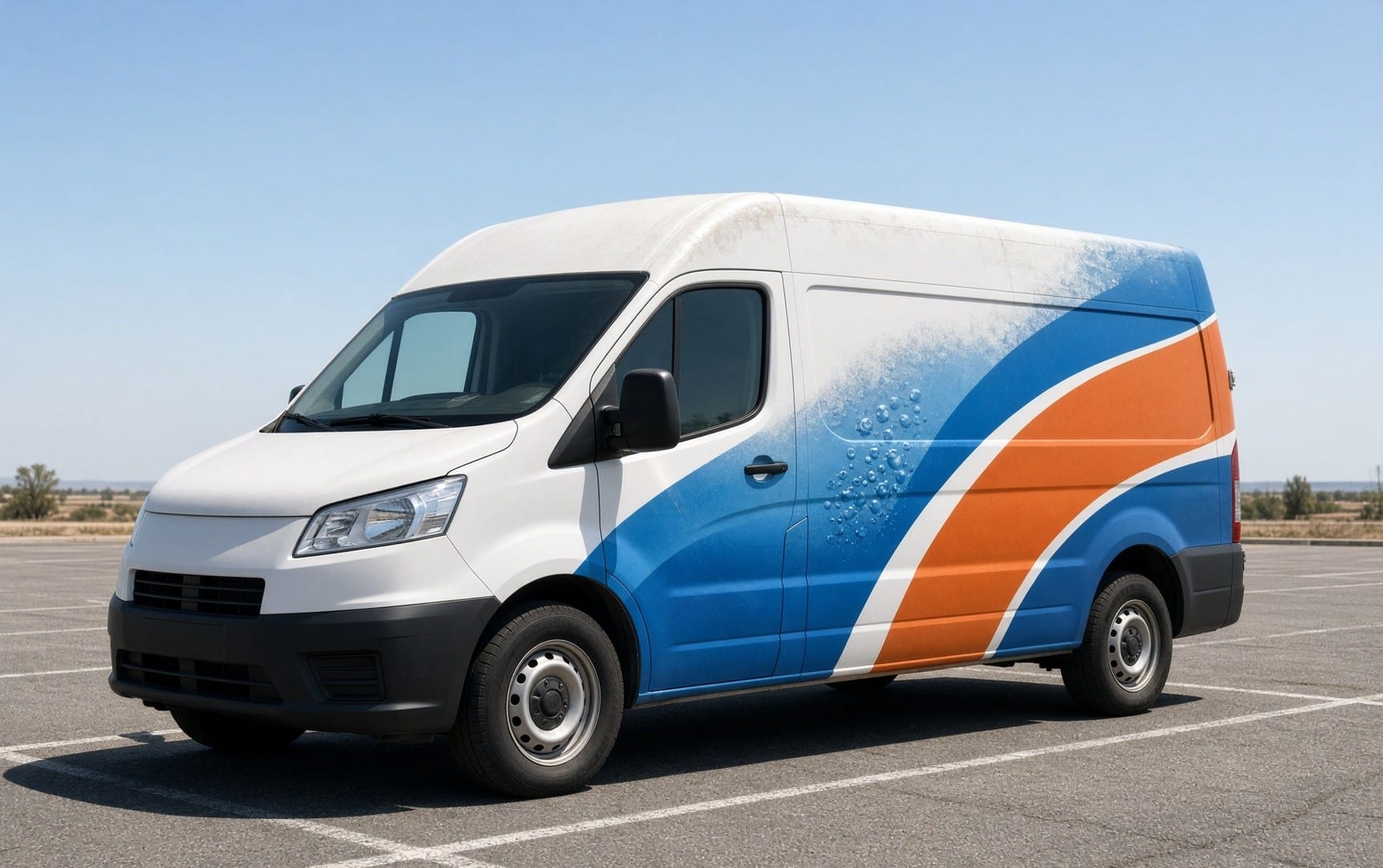
Remove a wrap when it starts to fail, when your brand changes, or before you sell or return the vehicle. Taking it off sooner is easier than taking it off later.
Common reasons to remove a wrap:
- Cracking in the film
- Fading
- Lifting or peeling edges
- Bubbles or loose sections
- A rebrand or a new logo
- Selling the vehicle or returning a leased one
Age matters because film that stays on past its rated life is harder to remove. Avery Dennison's installer guide says a wrap removed within its warranty period should come off in large sections with minimal residue. A wrap removed long after that tends to come off in small pieces and leave more adhesive behind.
For how long a wrap typically lasts, see How Long Does a Vehicle Wrap Actually Last?
How do you remove a vehicle wrap, step by step?

Warm a small section, lift a corner, peel slowly at a low angle, reheat stubborn spots, then clean off the adhesive. This is how to remove vinyl wrap from a vehicle of any size. The steps below show how to remove a car wrap, a van wrap, or a truck wrap. They are the same for each, and larger vehicles take longer. The best way to remove a car wrap is to use steady heat and peel slowly at a low angle.
What you need to remove a vinyl car wrap
- A heat source: a heat gun or a steamer. A hair dryer can work on a small, newer wrap.
- A plastic scraper or plastic razor blade
- A citrus-based adhesive remover
- Microfiber cloths
- Isopropyl alcohol
- Gloves and safety glasses
The steps
- Check the wrap: Look at its age and condition. A brittle or cracked wrap comes off in pieces, so allow extra time. Test one small area first to see how the film and adhesive respond.
- Pick the place: Work in a shaded or indoor space where you can control the temperature. Keep the film and the surface above about 50°F, because cold film tears easily. Wash the vehicle first to prevent dirt from scratching the paint.
- Warm a small section: Hold the heat source 6 to 12 inches from the surface and keep it moving. Manufacturer guidance for removable films puts the target at about 122 to 140°F, warm enough to make the film soft and flexible. Many professionals prefer a steamer on large vehicles because it heats evenly.
- Lift a corner: Use a plastic scraper or your fingernail. Metal blades scratch paint.
- Peel slowly at a low angle: Pull evenly at about 45 degrees or less. Keep heating just ahead of the peel. Slow pulling tears less film and leaves less residue. For a known film, follow the manufacturer's recommended angle.
- Reheat stubborn spots: Stop at the first resistance. Warm the spot again, then continue. Work panel by panel in small sections.
- Remove the leftover glue: Apply citrus-based adhesive remover and let it soak as directed on the label. Wipe with a microfiber cloth or a plastic scraper. This is the stage for removing car wrap glue, so work in small areas. Test the remover on a hidden spot first.
- Clean and inspect: Wipe the area with isopropyl alcohol and wash the vehicle. Then check the paint for damage or thin spots. Paint that sat under the film can look different from sun-exposed paint, especially around a partial wrap. That difference is normal.
What not to do
- Do not use metal blades or scrapers on the paint.
- Do not hold the heat close or in one spot. Too much heat can damage paint and warp trim.
- Do not yank the film or pull at a high angle.
- Do not work on cold film.
- Do not force a stuck area. Reheat it.
Heat tool safety: keep the tool moving and away from flammables and fuel. Wear gloves and eye protection. Never use a heat gun with solvents, and let it cool before setting it down.
What makes wrap removal harder?

Vinyl wrap car removal gets harder with age and sun exposure. Cheaper film and neglected adhesive make auto wrap removal even harder, and these factors determine how long the job takes.
- Old, sun-baked wraps: Long exposure to sun, heat, and humidity can make film brittle and reduce adhesion. Hoods, roofs, and other top surfaces take longer to heat and come off in smaller pieces.
- Cheaper film: Calendered film tends to crack and come off in pieces. Cast film is made without that stored tension and usually comes off more cleanly.
- Neglected adhesive: A wrap left on well past its rated life leaves more adhesive behind and takes more remover.
Cold weather and non-factory paint add difficulty too. For the cast versus calendered difference, see How We Build One Wrap to Survive a Utah Winter and a Nevada Summer.
Will removing a vinyl wrap from a car damage the paint?

On healthy factory paint, removing vinyl wrap with proper heat and a slow peel typically doesn't damage it. The risk increases on repainted or damaged paint, peeling clear coat, and when you use too much heat or force.
For the full answer, see Does Wrapping a Vehicle Damage the Paint?
Should you remove it yourself or hire someone?

A small, newer wrap from quality film is a fair DIY job. An experienced installer should handle box trucks, vans, trailers, buses, and old, brittle wraps.
- DIY: It takes basic tools and patience. A DIY removal commonly takes 8 to 20 hours or more. Check your wrap's warranty terms first, because removing it yourself can affect a claim.
- An installer: Experienced installers often use steamers and work in sections. Installers usually bill removal by labor time, and older wraps take longer.
- Large commercial vehicles: Size, height, and seams slow the job. An installer saves time and reduces the risk of paint damage.
Does the quality of the original wrap change how it comes off?

Yes. Film quality and installation largely determine how cleanly a wrap comes off years later. Quality cast film, installed correctly, should come off in large sections with little residue when removed within its rated life.
When you choose your next wrap, look for these:
- Cast film from a named manufacturer: We use 3M and Avery Dennison wrap films, most often Avery Dennison MPI 1105 cast vinyl with DOL 1460Z gloss cast overlaminate.
- Certified installers: Our installers hold 3M and Avery Dennison certifications.
- Warranties on the material and the artistry: Our warranties include a 5-year product warranty and a 1-year installation warranty.
Truck wrap removal is simpler at the end of a wrap's life when the original film was cast, and the install was done right. See our Commercial Fleet Wraps and Commercial Truck Wraps pages. To compare vendors, use Key Questions to Ask Before Hiring a Commercial Fleet Wrap Expert. For pricing, see How Much Does It Cost to Wrap a Vehicle?
Frequently Asked Questions
Can a car wrap be removed?
Yes, car wraps can be removed. Warm the vinyl, peel it slowly, then clean off the adhesive. It is easiest when the wrap is still within its lifespan and sits on factory paint.
How long does wrap removal take?
A professional typically takes 4 to 8 hours for a full vehicle. A fresh wrap can take 2 to 4 hours. An old or cracked wrap can take 8+ hours, and a box truck can take 8 to 14 hours. A DIY removal often takes 8 to 20 hours. Times vary with the vehicle size and the condition of the wrap.
Can I remove a wrap myself?
Yes, for a small, newer wrap from quality film. Older, brittle, or large commercial wraps are better left to an experienced installer.
How do I remove leftover adhesive?
Apply a citrus-based adhesive remover and let it soak as directed. Wipe with a microfiber cloth or a plastic scraper, then finish with isopropyl alcohol. Test the remover on a hidden spot first.
Can I wrap over an old wrap?
Usually not. Remove the old wrap first, because a new wrap follows whatever is underneath. Some film manufacturers allow you to cover intact, well-bonded film. Loose, cracked, or peeling film must come off before anything goes on top.
Does Queen of Wraps remove wraps?
We remove the old wrap when we install a new one. We do not offer removal as a standalone service.
The Bottom Line
A wrap comes off cleanly with steady heat, a slow low-angle peel, and the right adhesive remover. Smaller, newer wraps suit a DIY job, while large or old wraps take longer and are best left to an installer. The quality of the original film and how it was installed determine most of what happens during removal.
Get a Quote for a New Wrap
Ready for a new wrap? Get a Quote. Removing the old wrap is handled as part of the rewrap.
Call 801-477-6880 (Salt Lake City and Reno) or 702-997-6525 (Las Vegas).



