
Does Wrapping a Vehicle Damage the Paint?
No. A properly installed, quality vinyl wrap does not damage healthy paint. In most cases, it does the opposite: it shields the paint underneath from sun, scratches, and road grime for as long as it's on the vehicle.
That's the short version. Here's the longer one, because "no" only holds up under certain conditions, and those conditions matter more than most people realize before they get a quote.
The Short Answer
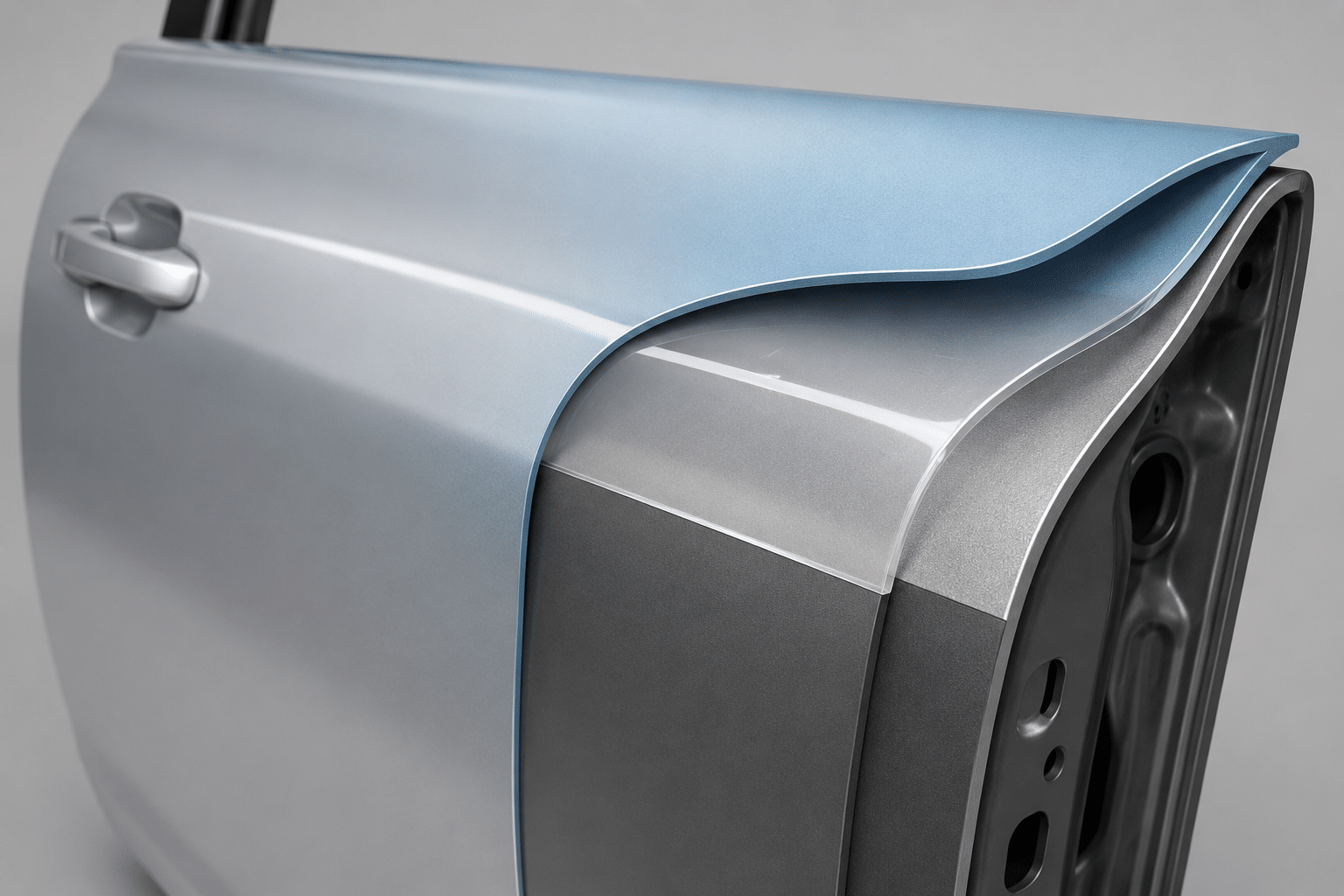
A wrap is a layer of vinyl film applied over your vehicle's existing paint, not a replacement. The adhesive bonds to the clear coat sitting on top of the paint, not the paint itself. When the wrap comes off, it takes the clear coat's surface layer with it, not the paint underneath.
That's the whole mechanism. Nothing about the material soaks into the paint, and nothing about a correct installation asks the paint to do anything it wasn't already doing. The wrap sits on top, does its job, and comes off clean, provided the paint underneath was in decent shape to begin with.
That "provided" is doing some work in that sentence, and it's the part most people skip past. We'll come back to it.
How a Wrap Protects Your Paint

Here's the part that surprises people: paint under a wrap often looks better after several years than paint that was left exposed the whole time.
Sun fades paint. Road debris chips it. Minor scrapes and scratches accumulate over years of parking lots and daily driving. A wrap takes that wear instead of the paint. Peel a wrap off a vehicle after five years, and the paint underneath is often the freshest-looking panel on the car, because it spent five years protected from exactly what ages everything else.
This matters just as much for a commercial fleet as it does for a single vehicle. A work truck on the road eight hours a day, five days a week, accumulates exactly the kind of wear a wrap is built to absorb. A fleet that gets rewrapped every five to seven years isn't just refreshing its branding. It's protecting the paint on vehicles that see far more road time than the average personal car.
Why This Matters More in Utah, Nevada, and the High Desert

Paint protection isn't an abstract benefit here. It's a direct response to what these climates actually do to a vehicle.
Salt Lake City's paint takes a hit from both directions: high-UV summers that fade unprotected color, and winters that put salt and road grit against every panel. Las Vegas paint deals with sustained heat well past 100°F for months at a time, the kind of sun exposure that ages clear coat faster than milder climates ever would. Reno sits in between, with real winters and dry summers both, which means paint there is stressed by extremes in both directions across a single year.
A wrap sitting on top of the paint absorbs that stress instead of the factory finish. In any of these three climates, that's not a small side benefit. It's one of the more practical reasons to wrap a vehicle, fleet or otherwise.
Why We Check Your Paint Before We Quote

The condition of your paint before wrapping determines almost everything about how the wrap performs and how it comes off later. Rust, peeling clear coat, deep chips, or a repaint that hasn't fully cured all create a weak bond point. If the paint underneath is already compromised, the wrap can pull some of it away during removal, not because the wrap is doing anything wrong, but because it's asking a damaged surface to do a job a healthy one would handle fine.
That's why paint condition is part of every quote we build, not an extra step tacked on later. Before we wrap anything, we walk the vehicle and look for what matters: chips down to bare metal, any active rust, clear coat that's already lifting or peeling, and recent bodywork or repaint that needs time to cure. A vehicle with solid factory paint gets a straightforward yes. A vehicle with visible issues gets an honest conversation about what we're seeing and what to expect, sometimes with a recommendation to handle the underlying paint problem first.
This isn't a formality. It's the difference between a wrap that protects your investment for years and one that creates a problem nobody saw coming. Whether you're wrapping one company car or an entire fleet of work vehicles, we'd rather flag a paint issue during the quote than have it become a surprise during removal five years later.
Wrap or Repaint? What Actually Costs Less

If the paint conversation has you wondering whether a repaint makes more sense than a wrap, the math usually points toward wrapping. Across the industry, a full vehicle wrap typically runs $2,000-$6,000, depending on vehicle size and design complexity. At the same time, a comparable-quality repaint often lands between $3,000 and $10,000 or more once you factor in bodywork and multiple coats. Wraps also install in days rather than the one to three weeks a full repaint can take.
The gap gets more relevant, not less, once paint condition is uncertain. Painting over rust or damage means real repair work before a single coat goes on, which adds cost fast. Wrapping still requires that same repair work if the damage is significant, but the wrap itself remains the cheaper, faster, fully reversible option on top of it.
Frequently Asked Questions
Can you wrap a car that already has chips, rust, or peeling clear coat?
You can, but the wrap won't fix those problems, and it may make them worse when the wrap eventually comes off. Chipped or peeling areas give the vinyl a weak surface to bond to, and removal can pull loose paint away with the film. Addressing rust and chips before wrapping gives the wrap a clean, stable surface and avoids surprises later.
Can you wrap a freshly painted or repainted vehicle?
Not right away. New paint releases gases as it cures, and wrapping over it too soon can trap those gases under the vinyl, causing bubbling or lifting. Most fresh paint jobs need three to four weeks to cure before a wrap goes on top fully.
Does removing a wrap damage the paint underneath?
Not when the paint was healthy going in, and the removal is done correctly. Professional removal uses controlled heat and a slow, even peel, which lifts the vinyl cleanly off the clear coat. Rushed removal, incorrect heat, or paint that was already compromised causes problems, not the act of removal itself.
How long can a wrap stay on before it starts to risk the paint?
Most quality wraps are rated for five to seven years. Leaving a wrap on well past that window makes it harder to remove cleanly, since aging vinyl and adhesive can become brittle or bond more aggressively over time. Removing a wrap within its rated lifespan carries very little risk to the paint underneath.
What does the paint look like after a wrap comes off?
On a vehicle with healthy paint going in, it usually looks better than paint that was left uncovered for the same length of time. The wrap absorbs UV exposure and minor scuffs that would otherwise hit the paint directly. Some adhesive residue is normal and comes off easily during a standard cleanup.
Does wrapping affect the paint on older or higher-mileage vehicles differently?
It can, depending on that vehicle's actual condition rather than its age alone. An older vehicle with well-maintained paint wraps just as safely as a newer one. An older vehicle with years of accumulated chips, oxidation, or touch-up paint needs the same honest assessment we'd give any vehicle with visible wear, which is exactly what we check for before quoting a wrap.
Is a vehicle wrap the same thing as paint protection film (PPF)?
No, though they're often confused. PPF is a clear or lightly tinted film applied specifically to protect paint, usually on high-impact areas like the front bumper and hood. A vinyl wrap is a full-color or branded film applied for appearance and advertising, and it offers paint protection as a side benefit rather than its primary purpose.
What does it cost to fix paint issues before wrapping?
That depends entirely on what we find and how extensive it is. Minor touch-up work costs far less than addressing active rust or significant clear coat failure. We'll walk you through exactly what we're seeing during the quote process and point you to the right next step, whether that's something we can handle directly or a recommendation to see a body shop first.
Do I need to do anything special to maintain paint that's under a wrap?
Basic care is enough. Regular washing keeps grime from building up against the vinyl, and parking in shade when possible reduces UV stress on both the wrap and the paint beneath it. No special product or process is needed beyond normal vehicle upkeep.



