
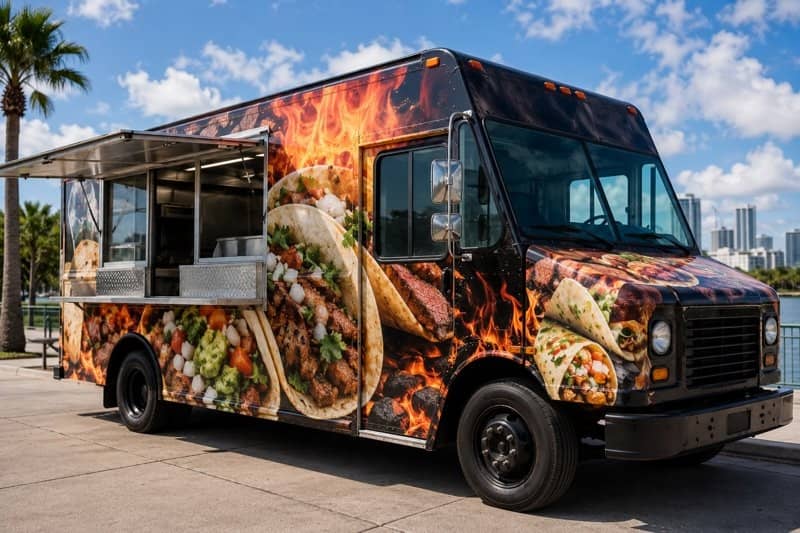
Can Custom Wraps for Food Trucks Withstand the Tough Conditions?
Food trucks face conditions that most vehicles don’t. Between hours of direct sunlight, heat from cooking equipment and exhaust systems, and road debris kicked up during transit, the exterior of a food truck takes a beating.
This wear adds up quickly, which raises a fair question: Is it possible to keep your custom food truck wrap looking clean and professional in those conditions?
The short answer is yes. But with the right materials.
Cheap vinyl applied sloppily and improperly cleaned behaves very differently from a high-quality wrap installed and maintained with care. It all comes down to the materials and wrap provider you use and how you clean your food truck.
Strong Wraps Begin With Better Materials
Food truck environments demand high-quality cast vinyls, UV-resistant ink, pressure-based adhesives, and protective coatings.
Vinyl is the foundation of a strong commercial wrap. Low-grade films can fade more quickly, peel at the edges, tear more easily, and discolor under prolonged UV exposure. Premium cast vinyls are more stable. They conform better to the vehicle’s contours, hold their shape through heat cycles, and keep graphics looking sharp for longer.
Pressure-based adhesives give that vinyl the grip it needs to stay in place. Unlike standard adhesives that can soften and lose their bond in sustained heat, pressure-based products maintain their hold through temperature swings and daily wear.
UV-resistant ink protects your graphics, menus, and branding from fading over time. Without it, prolonged sun exposure can dull your color scheme and make text harder to read. That would undermine the visibility your wrap is designed to create.
A protective overlaminate is the final layer of defense in a well-built wrap. It locks in the printed surface and helps the vinyl hold its shape through repeated heat cycles that would otherwise cause edges to lift or panels to lose conformity around curves. It also shields the graphics from discoloration caused by exhaust residue and UV exposure. Options include polyurethane overlaminates, ceramic coatings, and anti-graffiti finishes. The right choice depends on where your truck operates and how much direct sun and heat it faces daily.
Premium materials can’t eliminate every challenge your food truck faces. But a strong wrap better manages heat, UV rays, and road debris, extending the life of your investment.
Wrap Experts Account for Conditions
Some parts of a food truck get touched constantly. Door handles, edges near service windows, storage access points, and lower panels all take more abuse than the larger untouched surfaces.
Commercial vehicle wrap experts for food trucks account for this wear from the start. They plan critical branding for low-contact areas and pay special attention to edges and seams during installation. This care makes it much more likely your wrap will stay intact and looking sharp for several years.
Food trucks also live outside. The vehicle is exposed to sun, wind, rain, road debris, and temperature swings year-round. A food truck wrap needs to handle all of that while still looking attractive to customers.
Professional wrap partners plan for these conditions. They carefully seal vinyl around curves, corners, and hardware to maintain the right shape throughout the seasons.
Experienced wrap installers use their knowledge and attention to detail to account for the conditions you face every day. Their skillful application gives your materials and wrap design the best chance to do their jobs.
Maintenance Extends a Wrap’s Lifespan
Using high-quality materials and partnering with wrap experts sets your food truck up for success. But maintenance habits shape how long custom fleet wraps for food trucks stay whole, vibrant, and clean.
Treat your wrap like a working surface that needs routine attention rather than waiting to clean it when it looks dirty. Cooking residue near exhaust vents or mud left sitting on the surface too long can dull the finish or wear away the vinyl. Use a wrap-safe cleaning method every week to preserve the color, shape, and finish.
When cleaning your wrap, be gentle. Avoid aggressive chemicals, abrasive tools, high-pressure water, or automated car washes. These can lift the edges or tear the vinyl. Hand-washing your wrapped food truck with mild soap, low-pressure water, and a microfiber cloth reduces the risk of surface damage. Talk to a wrap expert for vinyl-safe grease removers.
Hand-washing your food truck also allows you to inspect your wrap. Check edges, seams, curves, and high-wear zones for tears or lifting. Catching small issues means you can replace a single panel rather than the whole wrap.
This kind of routine maintenance is simple, but it really extends the life of your investment. A food truck wrap can stay sharp and readable for years with this kind of care.
Yes, If You Choose Carefully
You ask a lot of a food truck wrap. You need it to stay vibrant and readable to attract customers. And it should handle whatever the road, weather, and events throw at it without falling apart.
That kind of food truck wrap exists, but it doesn’t happen by accident. You must carefully choose high-quality materials, professional wrap experts, and smart maintenance routines to achieve your goal. If those three parts are in place, a food truck wrap can support your business every time you open for service.



