
5 Signs Your Fleet Vehicle Branding Needs a Refresh
What Is Fleet Vehicle Branding, and How Do You Know It Needs a Refresh?
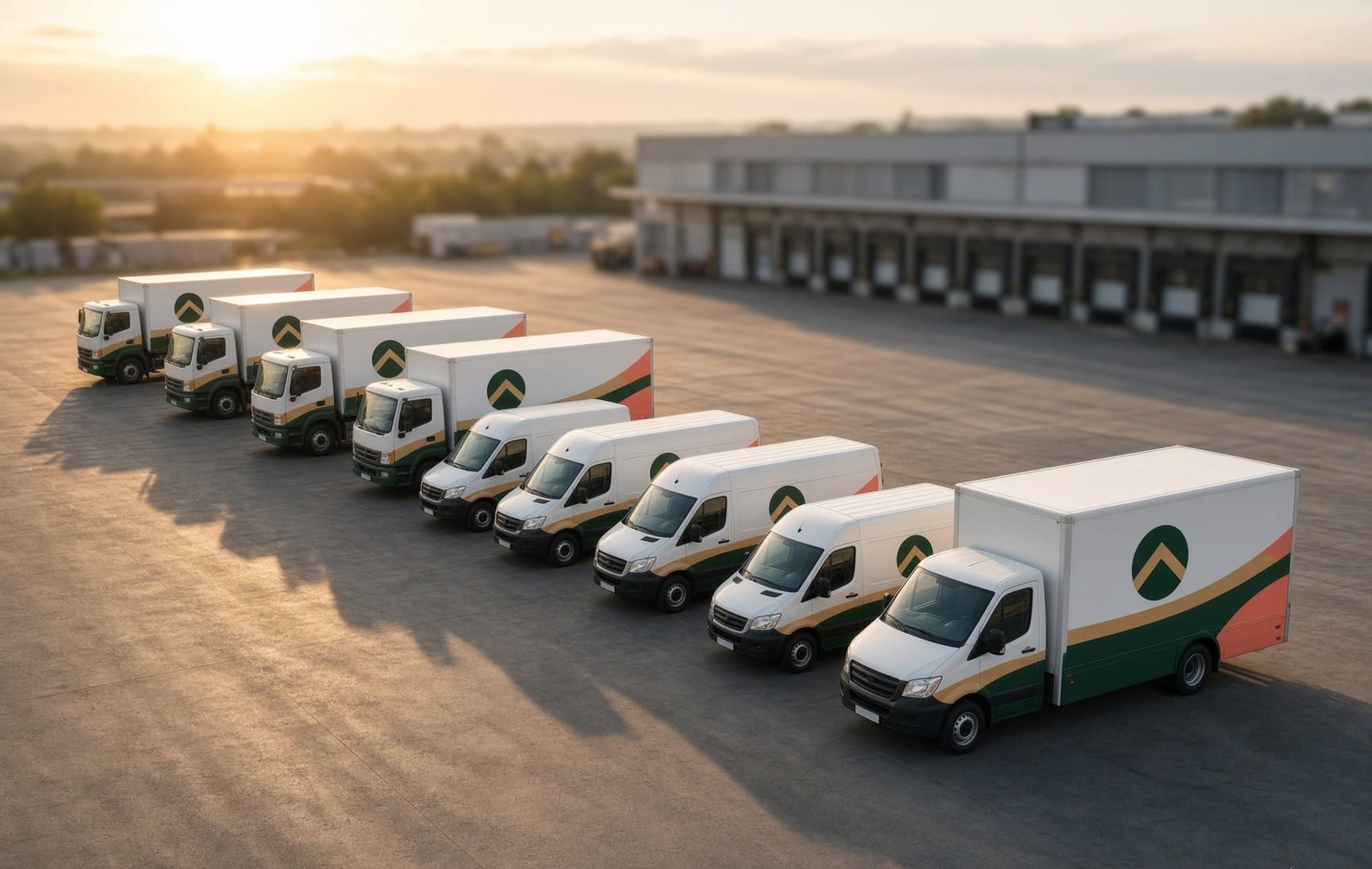
Fleet vehicle branding is the logos, colors, and graphics that make every vehicle in a fleet read as one company. Good fleet branding builds recognition with every mile and every parked truck. It needs a refresh when any of these five signs show:
- Your phone number, website, services, or logo is out of date.
- Your trucks do not match.
- The wraps are fading, peeling, or lifting.
- The business has changed.
- The trucks get seen, but nobody calls.
The sections below explain each sign and what to do about it.
Sign 1: Is Your Phone Number, Website, or Logo Out of Date?
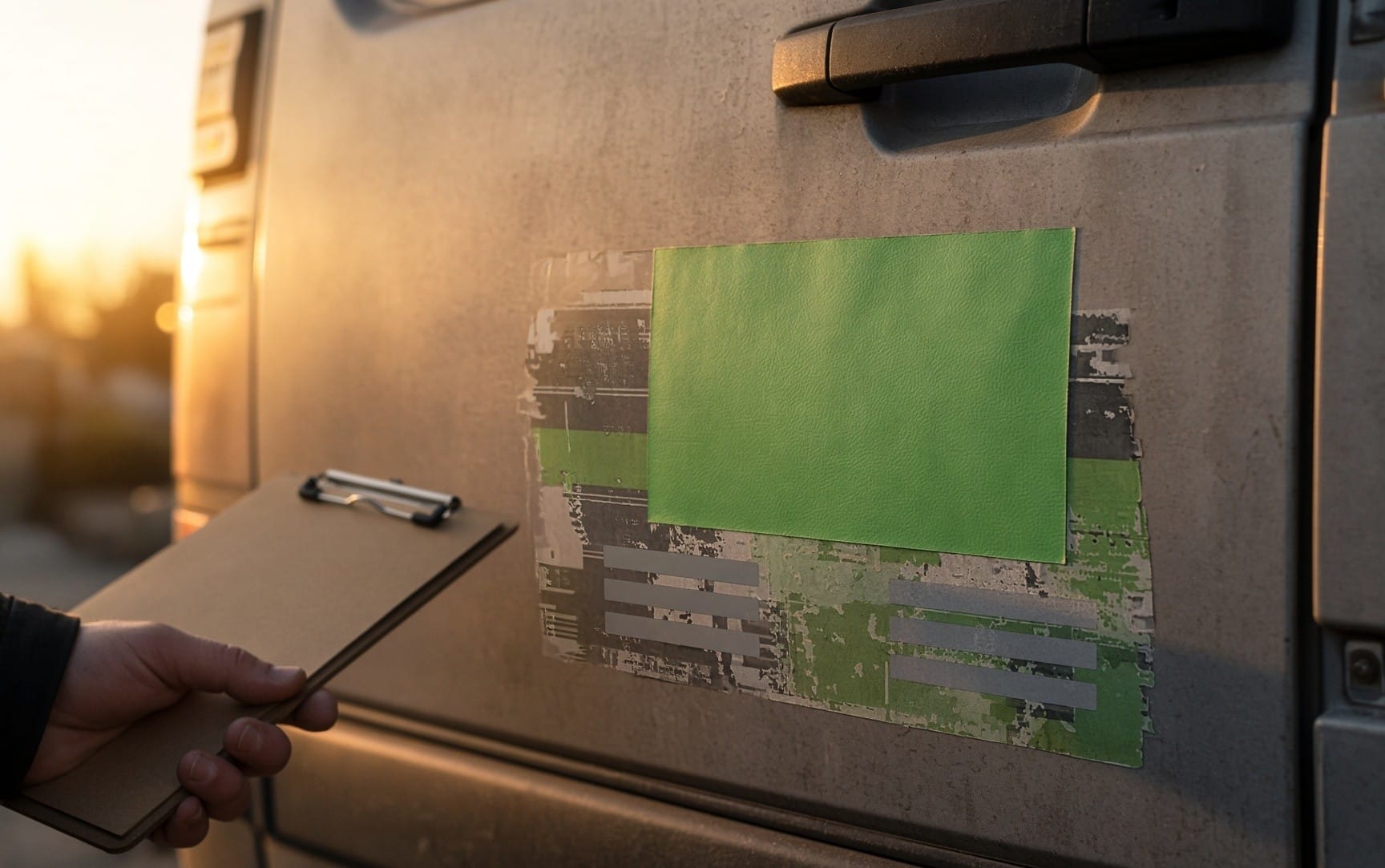
Yes, when anything printed on a vehicle no longer matches the business. A retired phone number sends calls nowhere. A dead web address sends buyers to an error page. A discontinued service on the door promises something you no longer sell.
Required markings need the same attention. Carriers display their name and USDOT number on covered vehicles, and Nevada contractors show a license number. Both must stay accurate. Confirm what applies to your operation.
Run a quick audit. Walk the lot and read each vehicle against your website and Google profile. Every mismatch is a reason to refresh.
Sign 2: Do Your Trucks Match?

When trucks carry different designs from different years or different vendors, the fleet reads as several companies. A customer sees two vans with the same logo in different places and cannot be sure both belong to you. A matched fleet does the opposite and reads as an established operation, even at ten trucks.
Mismatches build up quietly. Vehicles get added one at a time. Usually it happens when a vendor changes. A brand color prints a shade darker on one truck than on another. Each decision looks small, and the result looks like a patchwork.
The fix is one master design applied across every vehicle. That is how we build fleet wraps, and it is the core of strong vehicle fleet branding. Commercial Fleet Wraps explains how the process works.
Sign 3: Are the Wraps Fading, Peeling, or Lifting?

Yes means the film has aged out or never held. A worn truck undercuts the brand it carries, because customers read condition as a sign of how you run the business.
Film choice sets the timeline. Cast vinyl typically lasts five to seven years. Calendered vinyl often lasts two to five years. Budget film can look fine on day one and start failing within a year or two. Fading color, lifting edges, and cracks signal it's time to act.
Every wrap we install carries a 5-year product warranty and a 1-year installation warranty. Fleets can also rewrap a portion of their vehicles each year, avoiding a full replacement. Our guide How Long Does a Vehicle Wrap Actually Last? covers lifespan in detail.
Sign 4: Has the Business Changed?
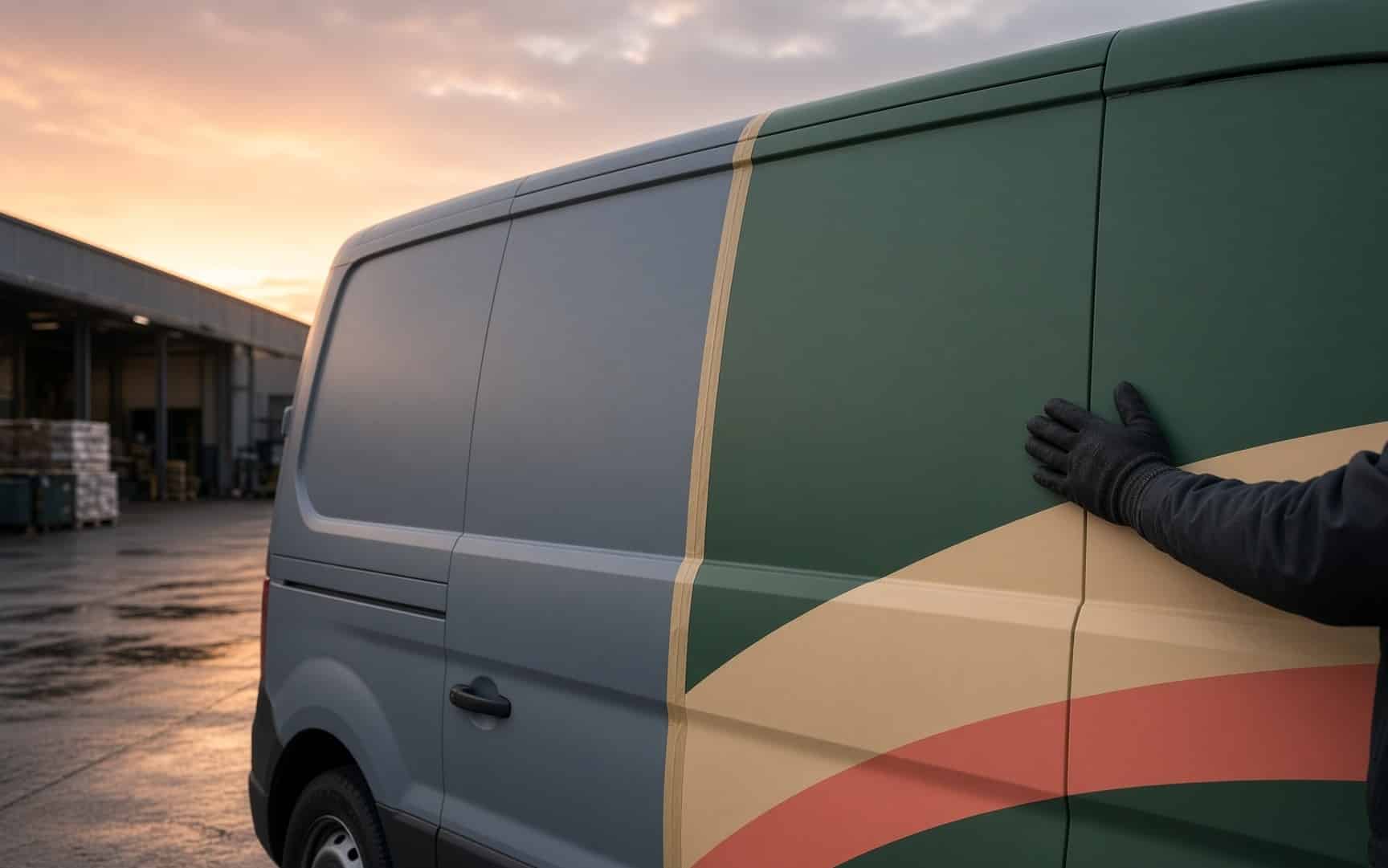
New services, new markets, a merger, or a new name means the fleet describes a business that no longer exists. A truck that still shows the old name or service area confuses customers and weakens the case for change.
A fleet rebrand works best in phases. Start with the oldest or most worn vehicles. Leave vehicles close to retirement or lease end for last, since refreshing them returns little. Leased vehicles need the lessor's approval before any graphics go on. Tell field teams the schedule in advance. Nobody should be surprised by trucks in two different looks during the transition. Tell customers about the change too, so the new look on the road is already familiar when they see it.
A new name also changes required markings, including the carrier name on covered vehicles. Update those with the design.
Sign 5: Do Your Trucks Get Seen, but Nobody Calls?

Usually the design fails at a distance, and the exposure is fine. A truck can park in front of an entire street and still bring no calls when the phone number cannot be read from the curb.
Check three things. Letter height comes first. The sign industry rule of thumb is about one inch of letter height for every 10 feet of viewing distance. Contrast comes second, because dark on light or light on dark reads faster than a pleasing but low-contrast palette. Copy comes third. A long service list turns into gray text at a distance. Keep to the name, one clear message, and the contact details.
Convert the layout to grayscale to test contrast. Then give each campaign its own phone number or web address, so you can see which vehicles bring calls. Our post Vehicle Wrap Advertising Cost: What You're Really Paying Per Impression covers the math on visibility.
Does a Fleet Logo Look Different on a Vehicle Than on Paper?
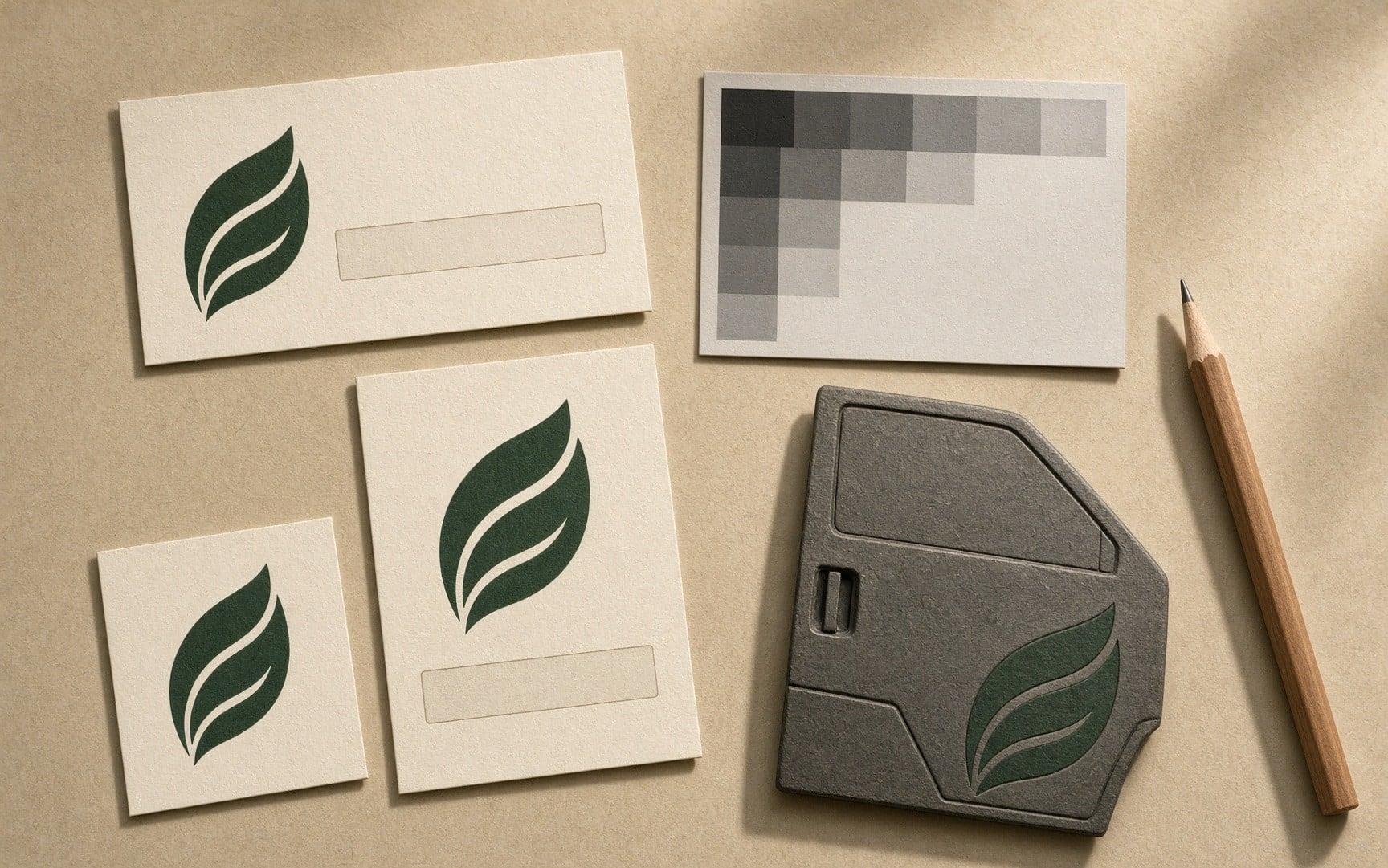
Yes, because a vehicle logo is read from a distance, in motion, across curved panels. A fleet logo that looks sharp on a business card can blur into its background across a parking lot.
Keep the layout simple and the contrast strong. Use a primary version for wide panels and a stacked version for tight spaces such as doors. Drop the tagline when space runs short, avoid thin script fonts, and leave clear space around the mark. Fleet logos work best when the same version sits in the same place on every vehicle of a type.
Our design team adapts your logo to each vehicle and builds a mockup you approve before anything prints. Finalize the logo before the vehicle work starts, and test it from a distance.
What Does a Fleet Branding Refresh Involve?
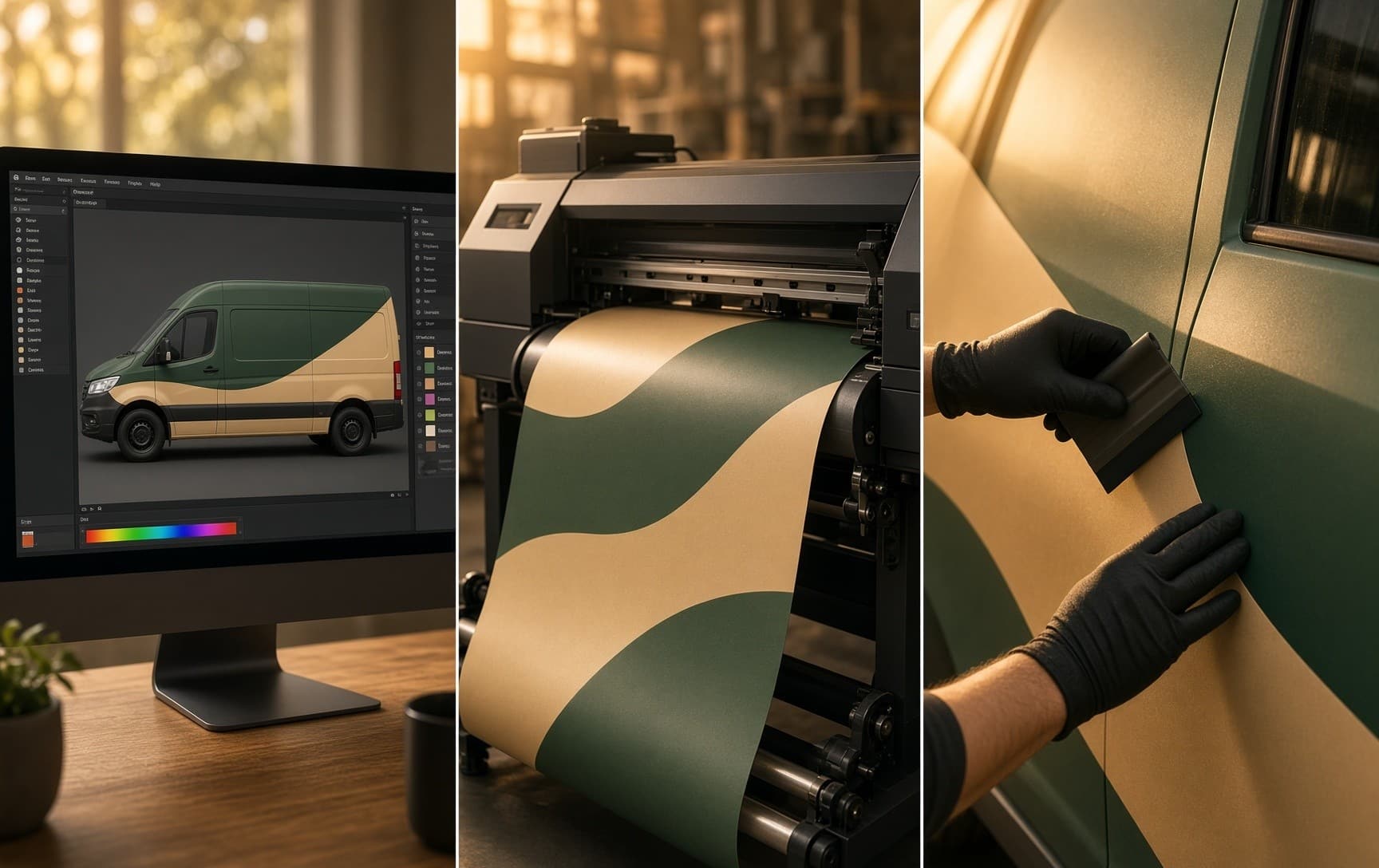
A fleet branding refresh has three steps: design, print, and installation. We stage the work around your operations so vehicles stay in service. Fleet branding graphics follow these same three steps at any scale, from a handful of trucks to a full fleet rebrand.
Design comes first. Our team builds a mockup on your actual vehicles, and you approve it before anything prints. Our Design service covers the process.
Print follows. We print every wrap in-house, including fleet orders from the same approved design. Print and Production explains how that works.
Installation is last. Certified installers apply the wraps in batches, and most single vehicles are back on the road within 1 to 3 business days. Installation has the details.
When we rewrap, we remove the old wrap as part of the job. We don't offer removal on its own. Our post, How to Remove a Vehicle Wrap the Right Way, explains the removal process.
Partial wraps start at $1,900, full wraps cost more, and fleets get up to 15% off. A single truck is a different project, and Commercial Truck Wraps is the better starting point.
How Do You Keep Fleet Branding Consistent Over Time?

Use one design standard, one vendor, and a record of what is on each vehicle. Together they form simple vehicle branding management that holds up as the fleet grows.
A design standard locks down the details that drift: logo placement for each vehicle type, minimum logo size, exact brand colors, fonts, and message order. Where you can, choose one base vehicle color for each vehicle class, because a brand color reads differently over different paint. One vendor means fewer hands and the same files each time. A record lists each vehicle, its graphics, its coverage level, and its install date. That tells you what to replace and when.
Review the record once a year. Move vehicles near the end of their film life to the front of the next phase.
Fleet Vehicle Branding FAQs
How much does a fleet rebrand cost?
It depends on vehicle size, coverage, and fleet size. Partial wraps start at $1,900, full wraps cost more, and fleets get up to 15% off. Every quote is based on your actual vehicles. Wraps are generally a deductible advertising expense, but this is general information and not tax advice. Confirm with a tax professional. Our post, Your Fleet Wrap Is Probably Already a Tax Write-Off,f explains the general treatment.
Can we rebrand a fleet in phases?
Yes. We stage installs in batches, start with the oldest or most worn vehicles, and leave vehicles near retirement for last. The design stays the same for each vehicle. There is no fleet minimum.
How long does a fleet rebrand take?
Most single vehicles are back on the road within 1 to 3 business days. We schedule fleets in batches around your operations. Older vehicles with worn graphics can take longer to prepare.
How often should fleet branding be refreshed?
When the film shows wear, typically after five to seven years for cast vinyl, or sooner when business details change. Whichever comes first sets the date.
Can different vehicles carry different designs?
Keep the core colors, logo, and key message identical. Vary the layout by vehicle type or role, such as a trailer rear or a van side, because each surface reads differently.
Do we rewrap the whole fleet when one vehicle is damaged?
No. You can often repair or replace a damaged panel on that vehicle alone, and the rest of the fleet stays untouched. Several damaged areas on one vehicle usually mean you need to replace that vehicle's wrap.
Do any rules limit what goes on a fleet vehicle?
Yes. Federal rules require the carrier name and USDOT number on both sides of covered commercial vehicles, in contrasting color and legible from 50 feet while stationary. Nevada contractors also show a license number. Many states limit window coverage, and plates and lights must stay visible. Confirm what applies to you with the agencies involved.
The Bottom Line
Any one of the five signs means the fleet is working against the business. The fix is a design, print, and installation job, done in phases that keep vehicles in service. A design standard, one vendor, and a record for each vehicle keep the fleet consistent afterward.


