
Vehicle Wrap Advertising Cost: What You're Really Paying Per Impression
The Stat Nobody Can Actually Source
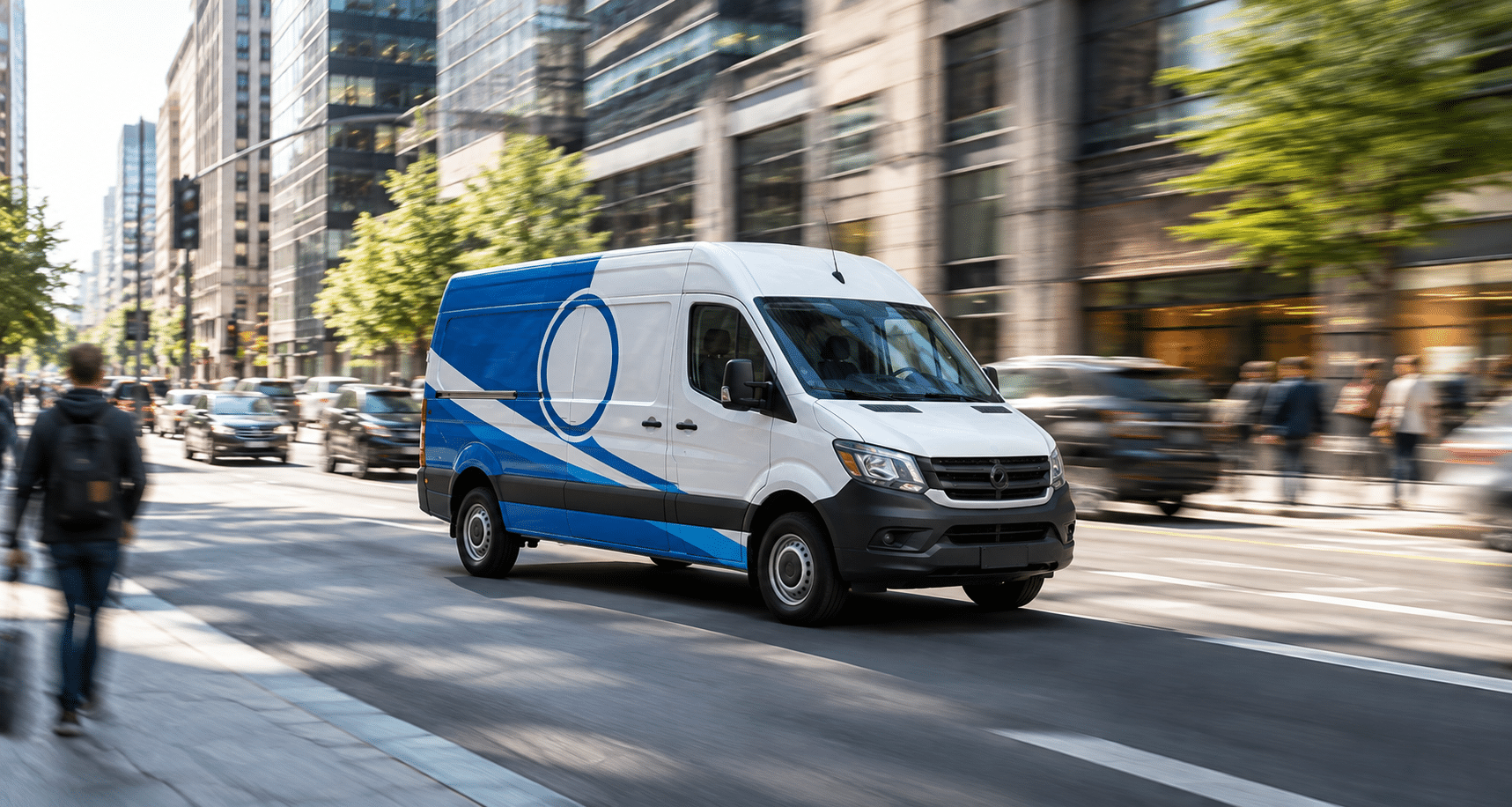
Most vehicle wrap advertising content opens with the same claim: a single wrapped vehicle generates 30,000 to 70,000 impressions a day. It shows up on dozens of sign-shop websites, usually attributed loosely to "the OAAA" or left unattributed entirely. The range even shifts depending on which site is copying which: 25,000–65,000 on one page, 40,000–70,000 on the next, 70,000–100,000 on another. That inconsistency is the tell. It traces back to a decades-old, unsourced estimate, not a measured study.
What's actually documented is a 2019 joint study by the Outdoor Advertising Association of America (OAAA) and Nielsen. It found that 90% of US travelers noticed some form of out-of-home advertising in the past month. 66% of smartphone users took action (searching online, visiting a business) after seeing one. That's a real, citable foundation. The rest of this post builds on numbers like that one, not the impressions figure everyone else repeats.
What a Wrap Actually Costs Per Impression

Using a conservative, clearly-labeled estimate instead of an inflated one, a vehicle wrap still works out to a fraction of a cent per impression. That's before counting the years it keeps running after the first one.
Here's the math, shown openly rather than asserted. Queen of Wraps' vehicle wraps start at $1,900 and include a 5-year product warranty. That works out to about $380 a year. Using a deliberately conservative daily-impression range of 10,000 to 20,000 (well under the figure most competitor posts lead with) across roughly 300 driving days a year, that's 3 to 6 million impressions annually. Divide it out, and the cost lands around $0.06 to $0.13 per thousand impressions. That's the low, defensible end of what a wrap can do, not the high end used to sell the idea.
That per-vehicle number moves in the business's favor as a fleet grows, too. Fleet discounts can reach 15% as vehicle count increases. That pushes the effective cost per impression lower still, while multiplying total daily reach across every route those vehicles drive. See our Commercial Fleet Wraps page for how that scales for a specific fleet size.
How That Compares to Other Advertising Formats

Even at the conservative end, a wrap's cost per thousand impressions is a fraction of what most other advertising formats charge for the same scale. Unlike the rest of this list, it's a one-time cost, not a recurring one.
| Format | Typical CPM (cost per 1,000 impressions) | Cost structure |
|---|---|---|
| Vehicle wrap (conservative estimate) | $0.06 – $0.13 | One-time production cost, no recurring spend |
| Google Search Ads | $2 – $10 | Ongoing, pay-per-auction |
| Billboard | $2 – $10+ | Recurring monthly rental |
| Radio | $6 – $15 | Recurring per-flight cost |
| Facebook Ads | $8 – $28 | Ongoing, pay-per-auction, varies by objective/season |
| TV | $18 – $25+ | Recurring per-flight cost |
Disclaimer: Ranges reflect commonly cited advertising-industry benchmarks. Treat these as directional comparisons, not guaranteed pricing. Actual cost depends on market, season, and campaign objective.
Scaled up, the gap compounds. A vehicle generating a conservative 4.5 million impressions a year would cost roughly $36,000 to $126,000 a year run through Facebook Ads at the ranges above. Through Google Search, that's $9,000 to $45,000 a year. Both recur every year.
A wrap generating that same reach costs its one-time production price, covered by a 5-year warranty; nothing further to keep it running.
Making Sure You Can Actually Track It

None of this matters if you can't tell it's working. A dedicated tracking phone number, a QR code built into the wrap design, and a simple "how did you hear about us?" question at intake are enough to connect a wrap to real leads. And it requires no dedicated measurement platform.
The Bottom Line
A wrap's real advantage isn't a jaw-dropping impressions number. It's that the math holds up without needing one. It has one production cost, covered by a warranty, generating impressions for years, at a fraction of what recurring ad formats charge for the same reach.
Vehicle Wrap Advertising Cost FAQs
What is cost per thousand impressions (CPM) in advertising?
CPM stands for cost per mille (mille being Latin for thousand), and it measures how much an advertiser pays for every 1,000 times an ad is seen. It's the standard way to compare very different formats, from a billboard to a social media feed ad to a wrapped vehicle, on the same scale.
How much does a vehicle wrap actually cost per impression?
It depends on the wrap's price, how long it stays on the road, and how many impressions it realistically generates. And that's the exact math most vehicle wrap content skips. Using a conservative estimate rather than an inflated one, a wrap in the $1,900–$3,000 range typically lands around $0.06 to $0.15 CPM over a multi-year lifespan. That's still far below most other advertising formats.
How many daily impressions does a vehicle wrap actually generate?
No verified, universal number exists. It depends on the vehicle's route, the city's population density, and how much time it spends parked in view versus driving. Treat any flat "30,000 to 70,000 a day" claim as rough industry shorthand, not a measured fact. Build an estimate around actual routes instead.
How does a vehicle wrap compare to a billboard in cost per impression?
By commonly cited benchmarks, a vehicle wrap costs meaningfully less per thousand impressions than a billboard. Billboard CPM typically runs $2 to $10 or more, plus a recurring monthly rental fee. A wrap is produced once and keeps generating impressions for years without that rental cost. The comparison isn't perfectly even, though: a billboard reaches a fixed audience passing one location, while a wrap's reach moves with the vehicle's actual routes.
Is a vehicle wrap cheaper than running Facebook or Google ads?
Per impression, generally yes, by a wide margin. Facebook CPM commonly runs $8–$28, and Google Search CPM runs $2–$10, both ongoing costs. A wrap is a one-time production cost that keeps generating impressions for years without additional spend. It works differently, though: a wrap builds local, ambient visibility rather than targeting a specific search or audience the way paid ads do.
Can I track leads generated by a vehicle wrap?
Yes, with a few simple tools: a phone number used only on the wrap, a QR code linking to a landing page, and a quick "how did you hear about us?" question at intake. None of it requires a dedicated tracking platform to be useful.
Are vehicle wrap costs tax deductible?
Generally treated as a business advertising expense, though the specifics depend on your situation, and this isn't tax advice. A full breakdown of how that actually works is coming in a dedicated post.


