
Can You Wash a Wrapped Car? How to Care for a Vehicle Wrap
The Short Answer
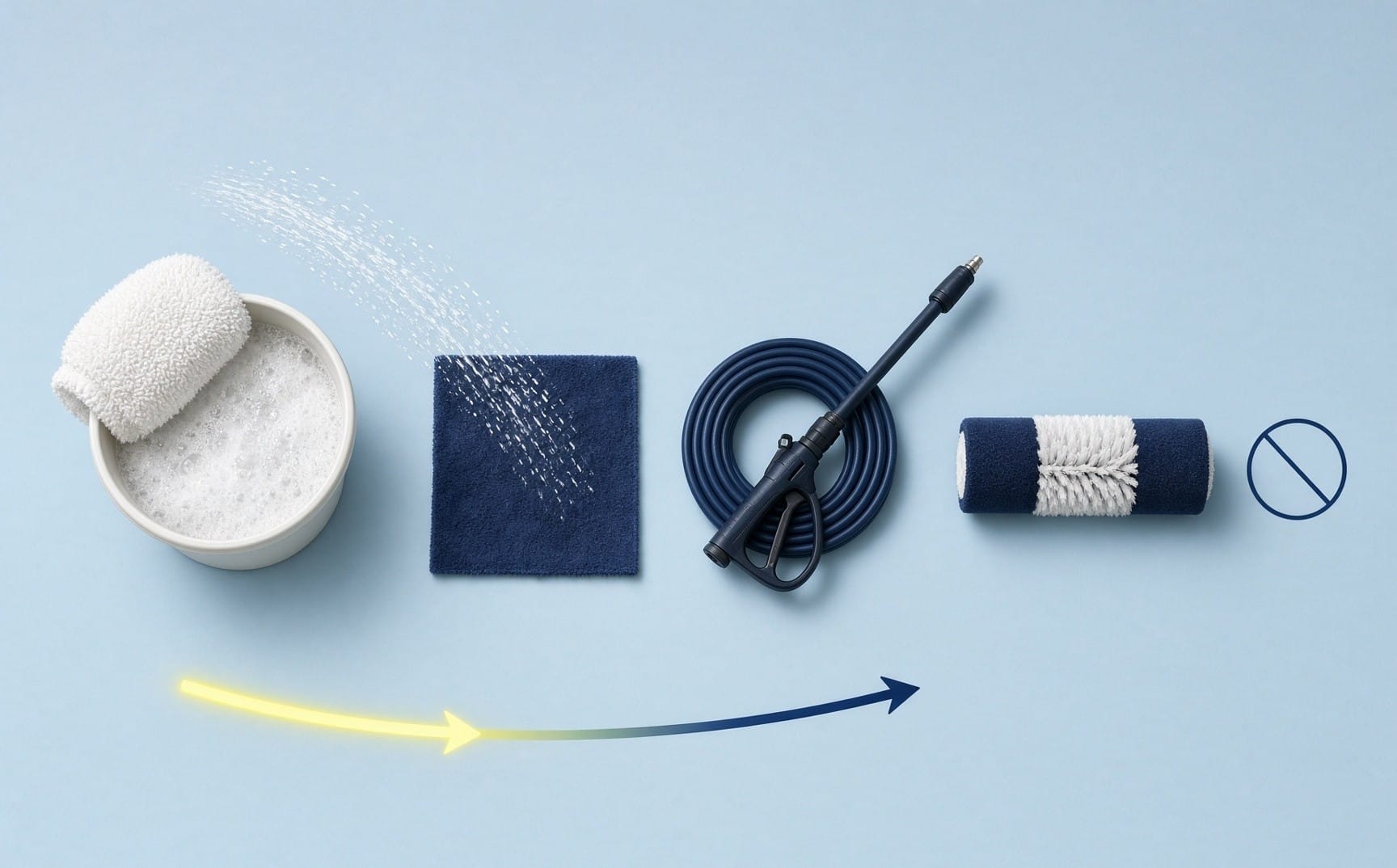
Yes. You can wash a wrapped car, and you should. Hand washing is the best method. A touchless wash works as a fallback; avoid brush washes, and use pressure washing only as a last resort, within firm limits.
Wait at least 48 hours after installation before the first wash. Avery Dennison recommends cleaning a wrap ideally every two weeks, because dirt left on the film breaks it down over time, especially under sun and heat.
We install both 3M and Avery Dennison films, so this guide to vehicle wrap care follows what both manufacturers publish.
| Wash method | Verdict | The rule |
|---|---|---|
| Hand wash | Best | Use mild soap and a soft mitt, then rinse and dry the film. |
| Waterless wash or spray wax | Good for light dirt | Use a product free of petroleum distillates and test a small spot first. |
| Touchless automatic wash | Fallback | Decline the wax cycle and check the edges afterward. |
| Brush or friction wash | Avoid | Brushes scratch the film and catch edges. |
| Pressure wash | Last resort | Stay under 1,200 psi and keep the nozzle 12 inches from edges. |
Can You Take a Wrapped Car Through a Car Wash?
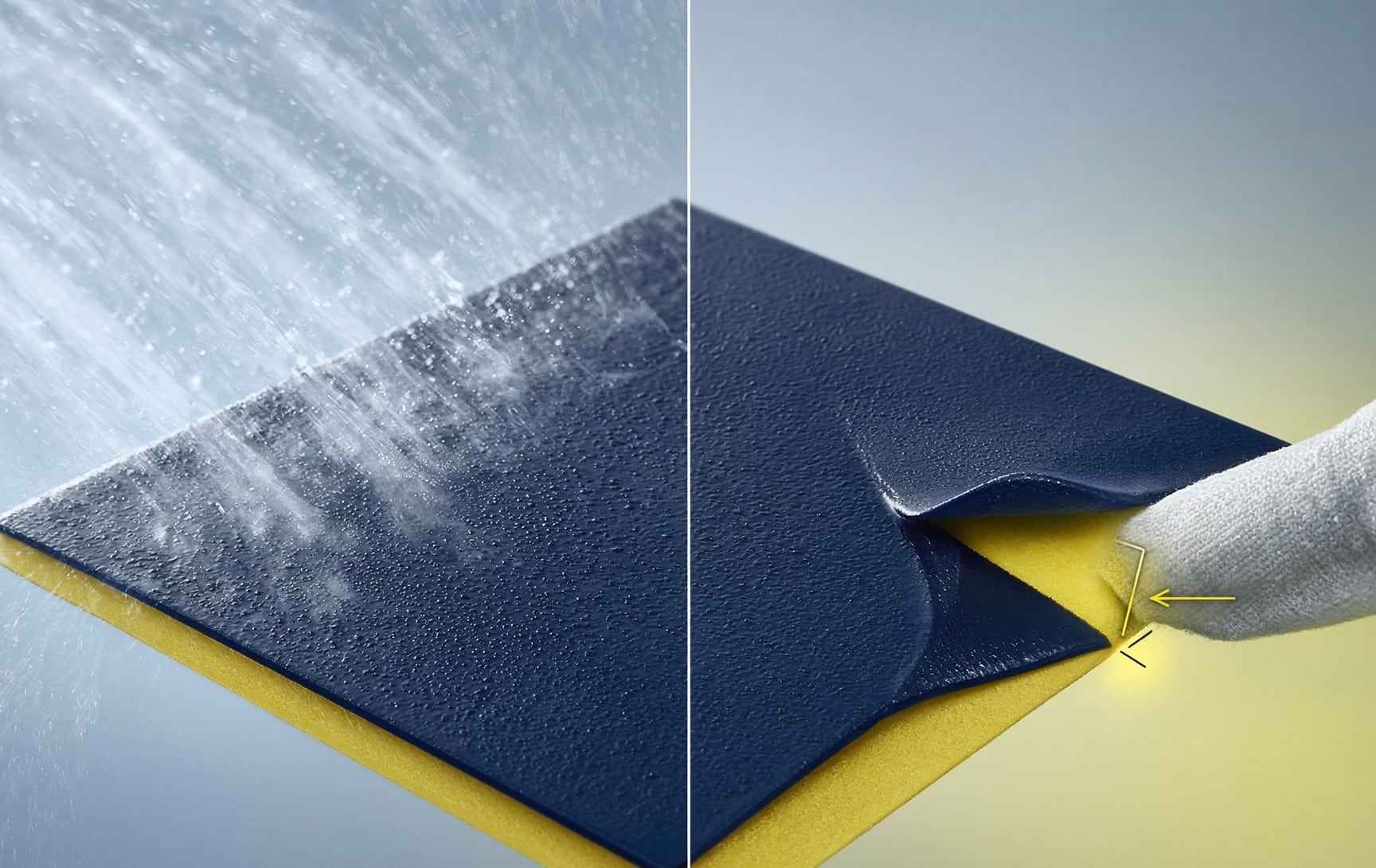
Automatic car washes fall into two types for a wrap owner. A touchless car wash is acceptable. A brush wash is not. Avery Dennison and 3M both say brush washes can scratch the film, dull the finish, and catch an edge, which creates a point where the wrap starts to fail. 3M adds that touchless is the choice when you can't avoid a car wash.
The same rule covers a drive-thru tunnel. Cloth strips and foam brushes touch the film like bristles, so we treat them as brush washes. You can take a wrapped car to a car wash, and you can go through a touchless car wash with vinyl wrap.
When a wrapped car has to go through the car wash, these habits protect the film:
- Choose a touchless wash.
- Skip the wax option: Many car wash waxes contain petroleum distillates, which can damage the film.
- Let the vehicle dry naturally or dab it dry with a microfiber towel.
- Walk the edges and seams for lifting before you drive away.
Touchless carries less risk than a brush wash, and some risk remains. Installers in trade forums have described a lifted edge appearing after a touchless wash. Check the edges after any wash, and tell us early when something lifts.
Wraps we install use 3M or Avery Dennison film, and we will point you to the care guidance for the film on your vehicle.
How Long After Wrapping a Vehicle Can You Wash It?
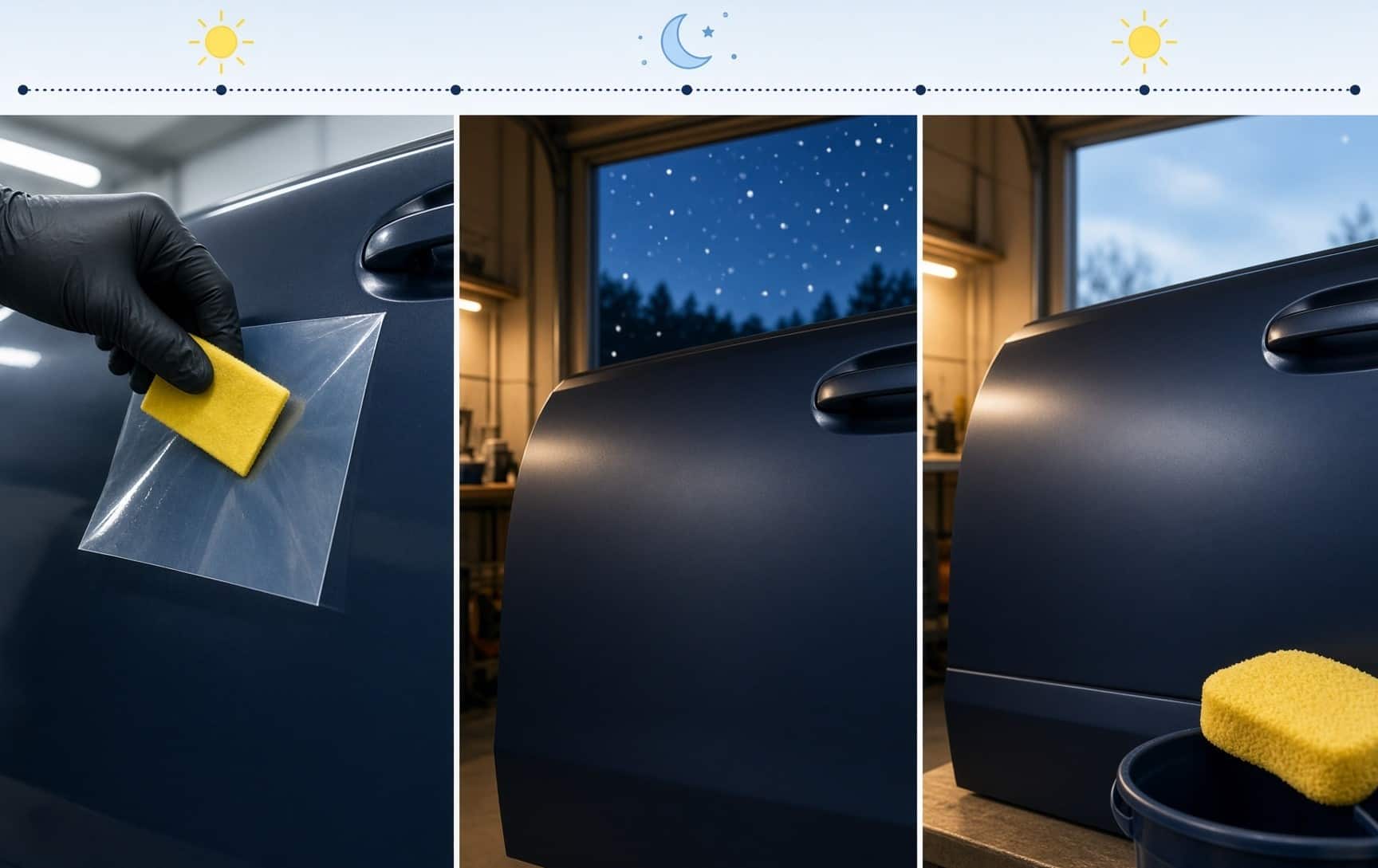
Wait at least 48 hours after wrapping a car, van, or truck. That is our standard, and some films ask for longer, so confirm the film on your vehicle with your installer.
The manufacturers publish different numbers. 3M asks for 24 hours before washing a vehicle wearing its commercial graphics films. It asks for 72 hours on its wrap and color change films. Avery Dennison lists no wash wait time in its care bulletin, and its installation bulletin requires 24 hours to set before the vehicle returns to service. Our 48 hours sits between them.
Winter changes the plan. Avery Dennison asks that a newly wrapped vehicle sit at room temperature for at least 24 hours before it heads back out into the cold. 3M asks for at least 12 hours above 60°F before cold or wet exposure. Utah and Reno winters make this a real step.
The adhesive keeps building its bond during this period, and washing too early works against it. Care shapes how long a vehicle wrap lasts, and that post covers the lifespan side in full.
Can You Pressure Wash a Wrapped Car?
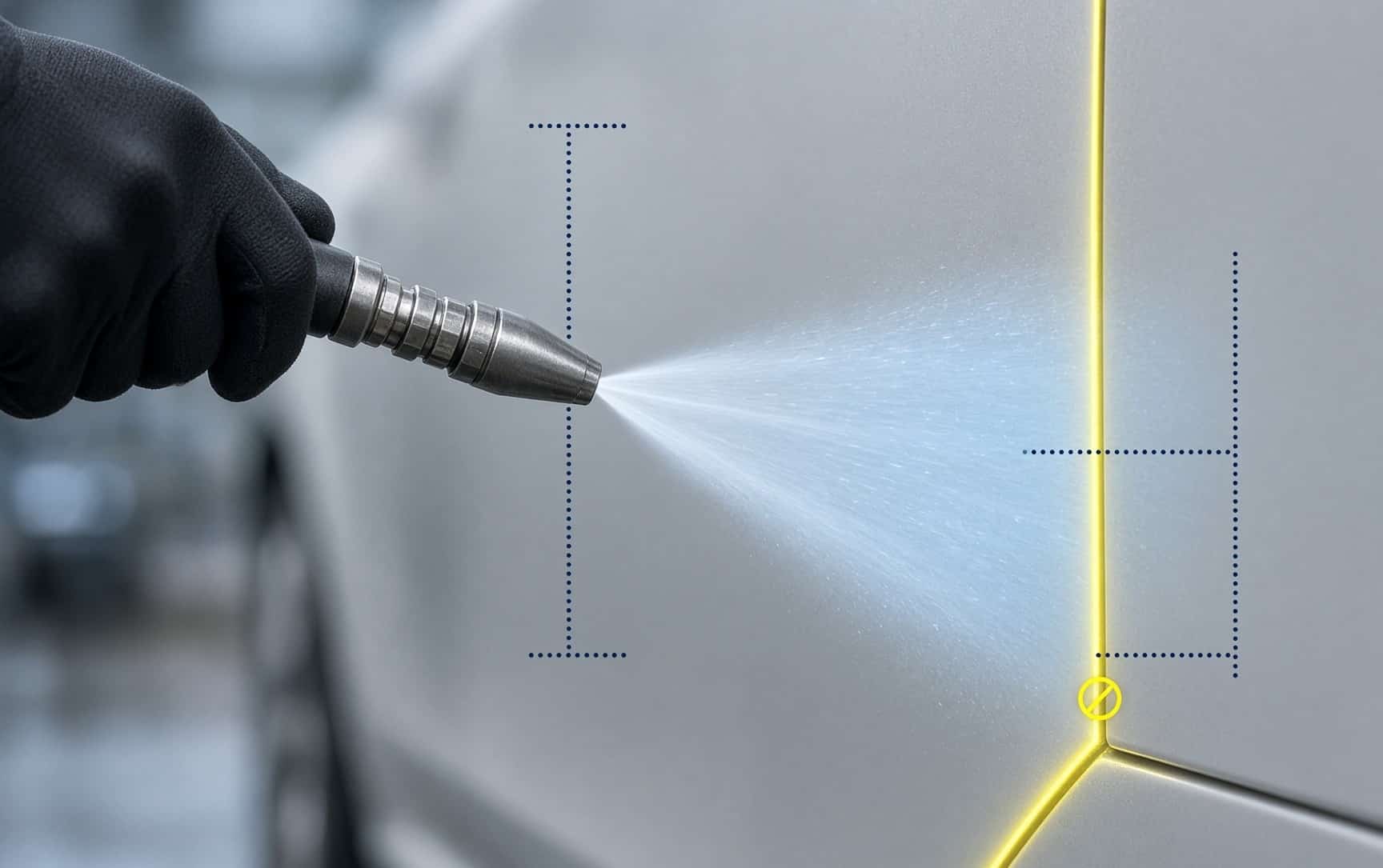
Only as a last resort, and only within firm limits. Avery Dennison says to use a pressure washer only after other methods have failed. It warns of edge lifting and wear on the film's face. Power washing and jet washing follow the same limits.
Avery Dennison sets these limits:
- Pressure below 1,200 psi.
- Water temperature below 180°F.
- Nozzle at least 12 inches from the edges.
- Nozzle held square to the surface.
- A 40° wide spray pattern.
3M's guidance for its Protection Wrap Film also caps pressure at 1,200 psi and calls for a 40° or wider nozzle with a tip guard. For its commercial graphics, 3M says to keep high-pressure spray off the film edges.
Never aim a stream at a seam, an edge, or a lifted corner. Water driven under an edge can turn a small lift into a large one.
Some older guides quote 2,000 psi. That number comes from 3M bulletins that 3M retired in December 2024, so treat 1,200 psi as the ceiling.
How Do You Clean a Vinyl Wrap by Hand?
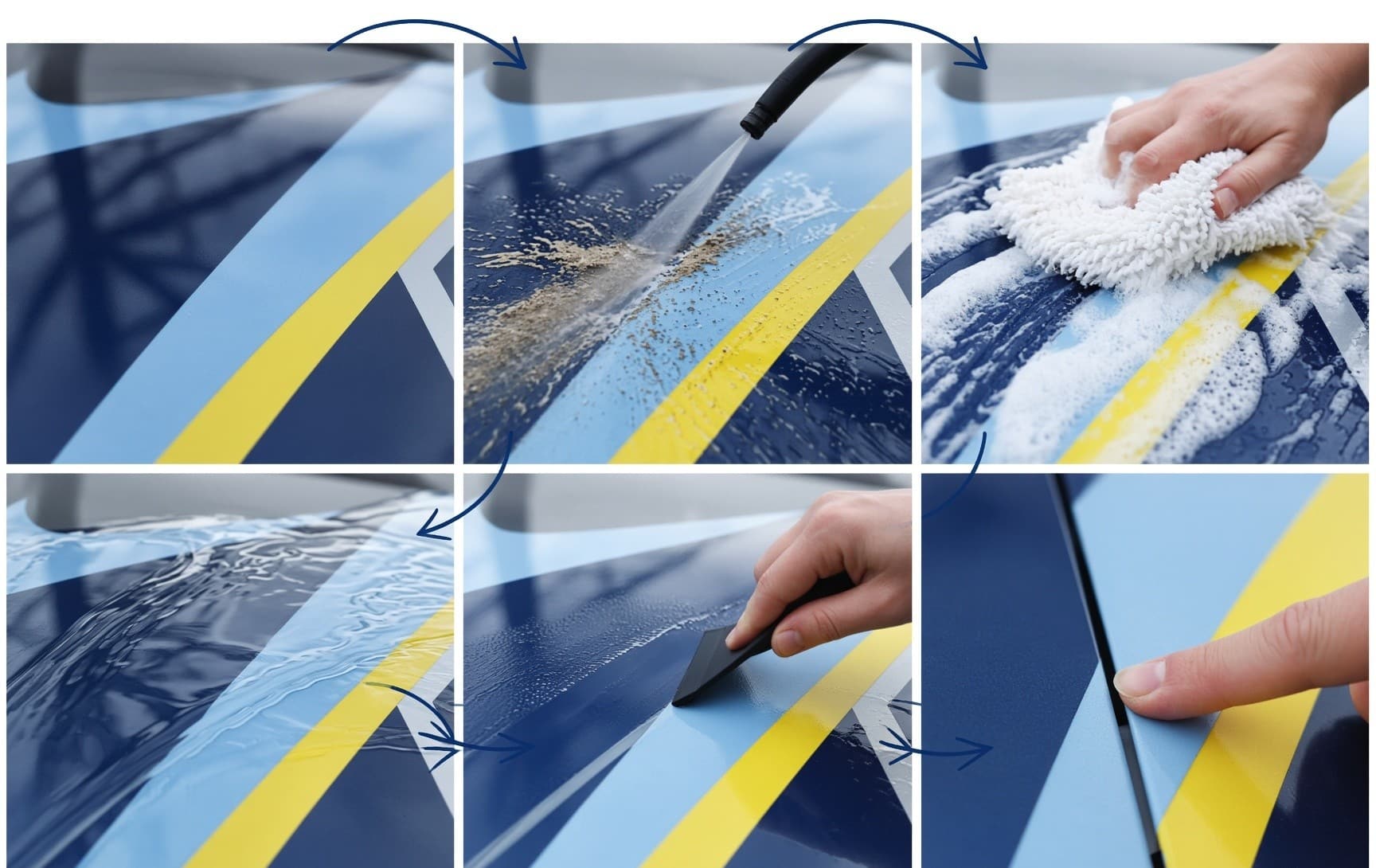
Rinse first, wash gently from top to bottom, rinse again, and dry the film. Here is how to clean vinyl wrap on a car, van, or truck:
- Park in the shade and let the panels cool.
- Rinse the whole vehicle with clean water to lift loose grit before anything touches the film.
- Wash from top to bottom with mild soap and a soft mitt or sponge. Avoid scrubbing.
- Rinse thoroughly until no soap remains.
- Dry with a silicone squeegee, chamois, or microfiber towel to prevent water spots, taking care not to lift an edge.
- Look over the edges and seams as you dry.
Use a mild soap with a pH between 5 and 9 that is free of abrasives, strong solvents, and alcohol. A pH-neutral car wash soap fits that range. Keep acetone, paint thinner, lacquer thinner, and other strong solvents away from the film.
Avery Dennison recommends cleaning a wrap regularly, ideally every two weeks, and whenever it looks dirty. Salt, dust, bugs, and sap call for washing sooner.
Between washes, a waterless wash or spray wax works well on a lightly dirty vehicle, and Avery Dennison calls it the preferred method. Choose a product free of petroleum distillates, and test it on a small spot first.
How Do You Clean Matte and Specialty Finishes?
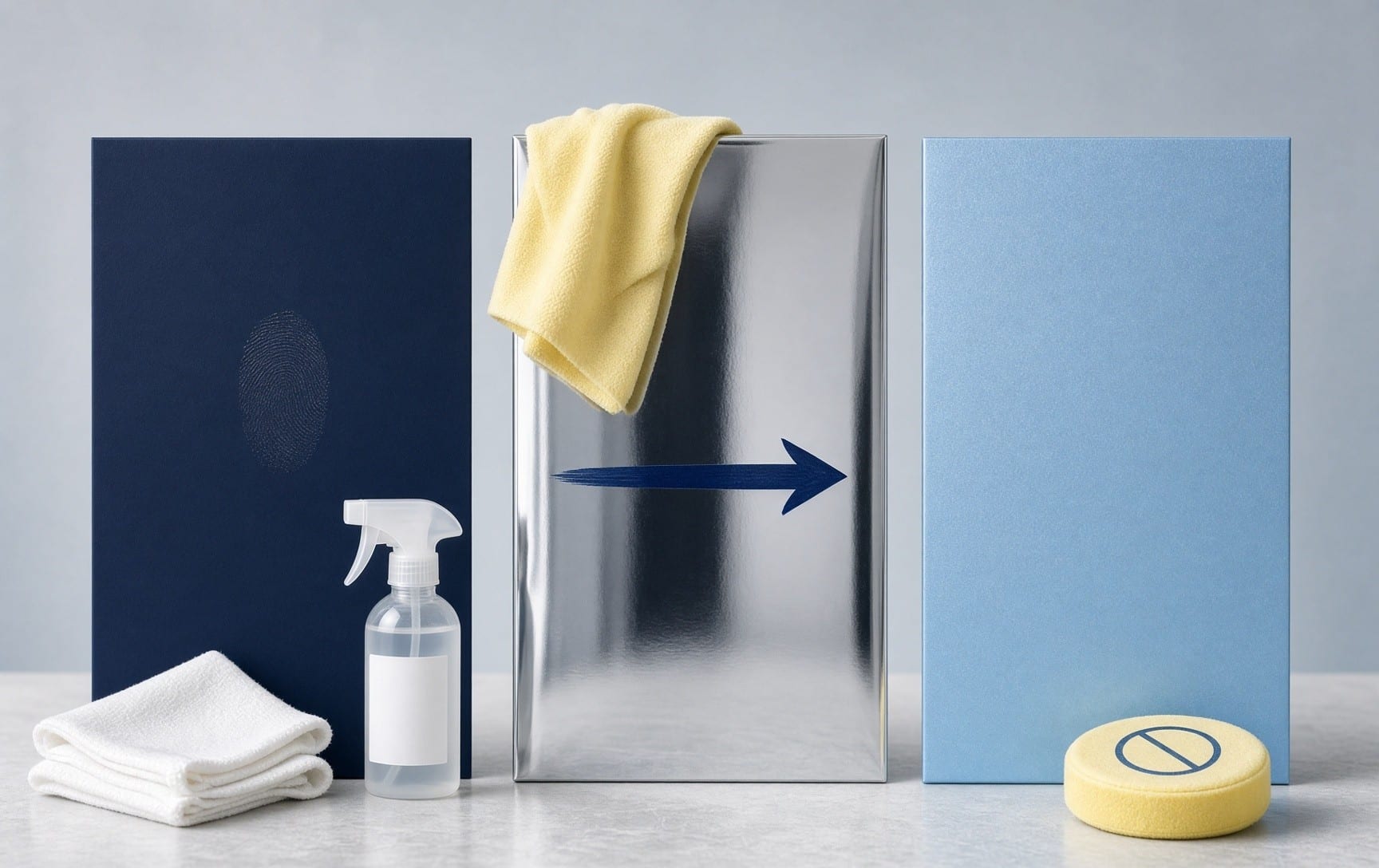
Washing a matte wrap follows the same hand-wash routine with three extra rules. Matte, satin, and textured films get no wax or polish. Use an alcohol-and-water wipe for fingerprints. Chrome film never gets scrubbed.
Matte and satin finishes show fingerprints readily. Both manufacturers publish a wipe. Avery Dennison uses a 2:1 mix of isopropyl alcohol and water, and 3M uses 70% isopropyl alcohol and 30% water. Use a clean, lint-free towel, keep the wipe quick, and dry the film afterward.
Some wrap-care products can leave slight streaks on matte film, so test a small hidden spot first. Wax and polish add sheen, and sheen spoils a matte finish's flat look.
Chrome film scratches easily. Wipe it with a soft chamois or microfiber towel in one direction and use grit-free products. Brushes stay away from chrome.
Matte and satin finishes are common on color change projects, and our color change wraps page covers that service.
How Do You Remove Bird Droppings, Bugs, Sap and Fuel?
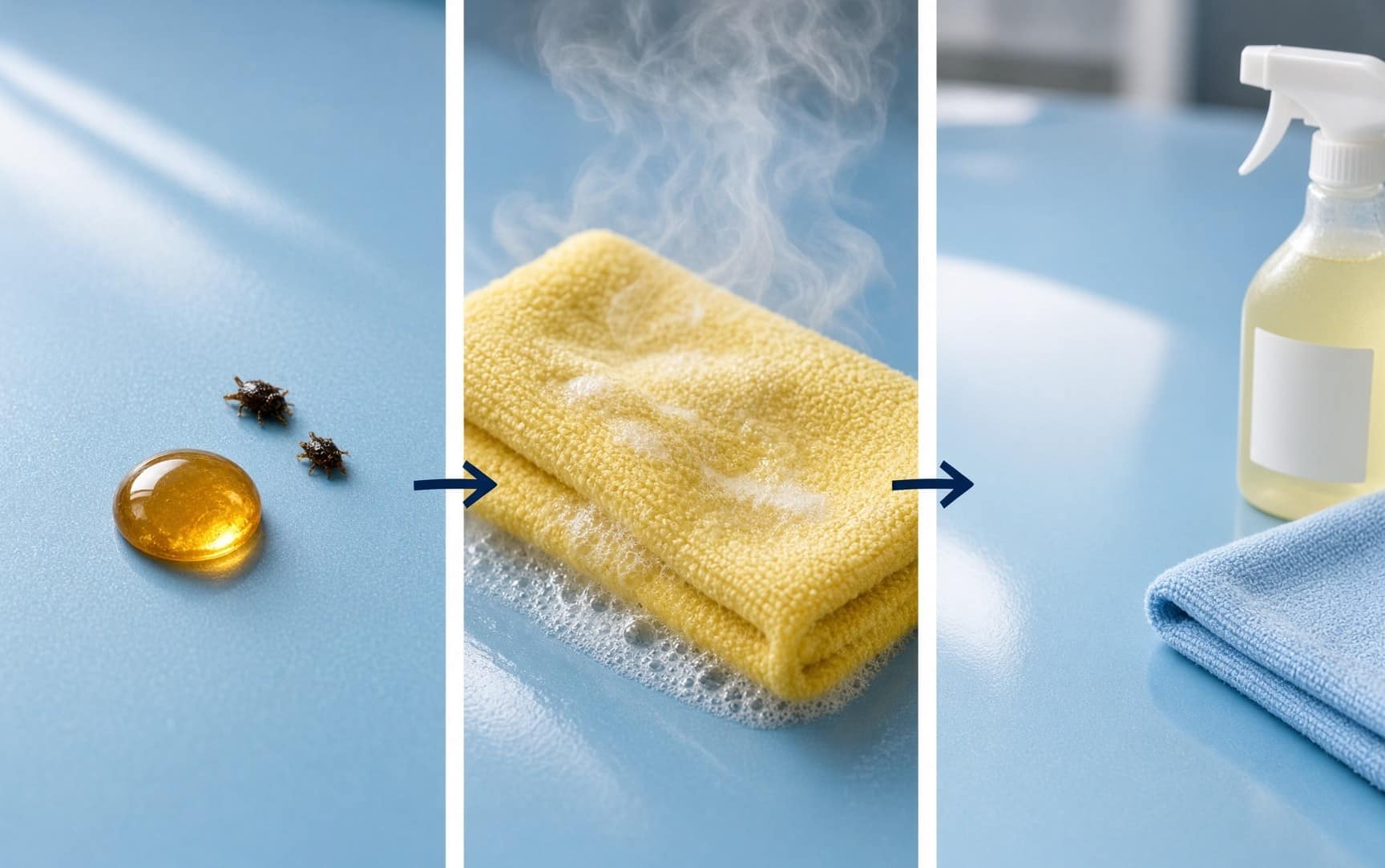
Quickly. Clean them as soon as you see them, because they can stain and damage the film. Fuel does the same, so wipe it off immediately.
For sap, 3M recommends soaking the spot in hot, soapy water for several minutes, then rinsing and drying. For bugs, droppings, and tar, Avery Dennison's spot cleaner takes 2 to 3 sprays and up to 30 seconds. Wipe with a clean microfiber towel, then use a wrap cleaner to lift the residue.
Rough scrubbing and abrasive tools scratch the film. Keep acetone and other aromatic solvents off it.
Keep a bottle of wrap-safe spot cleaner and a clean microfiber towel in each vehicle. Wiping it the same day is much easier than repairing it later.
How Do Salt, Dust and Heat Change How You Wash a Wrap?
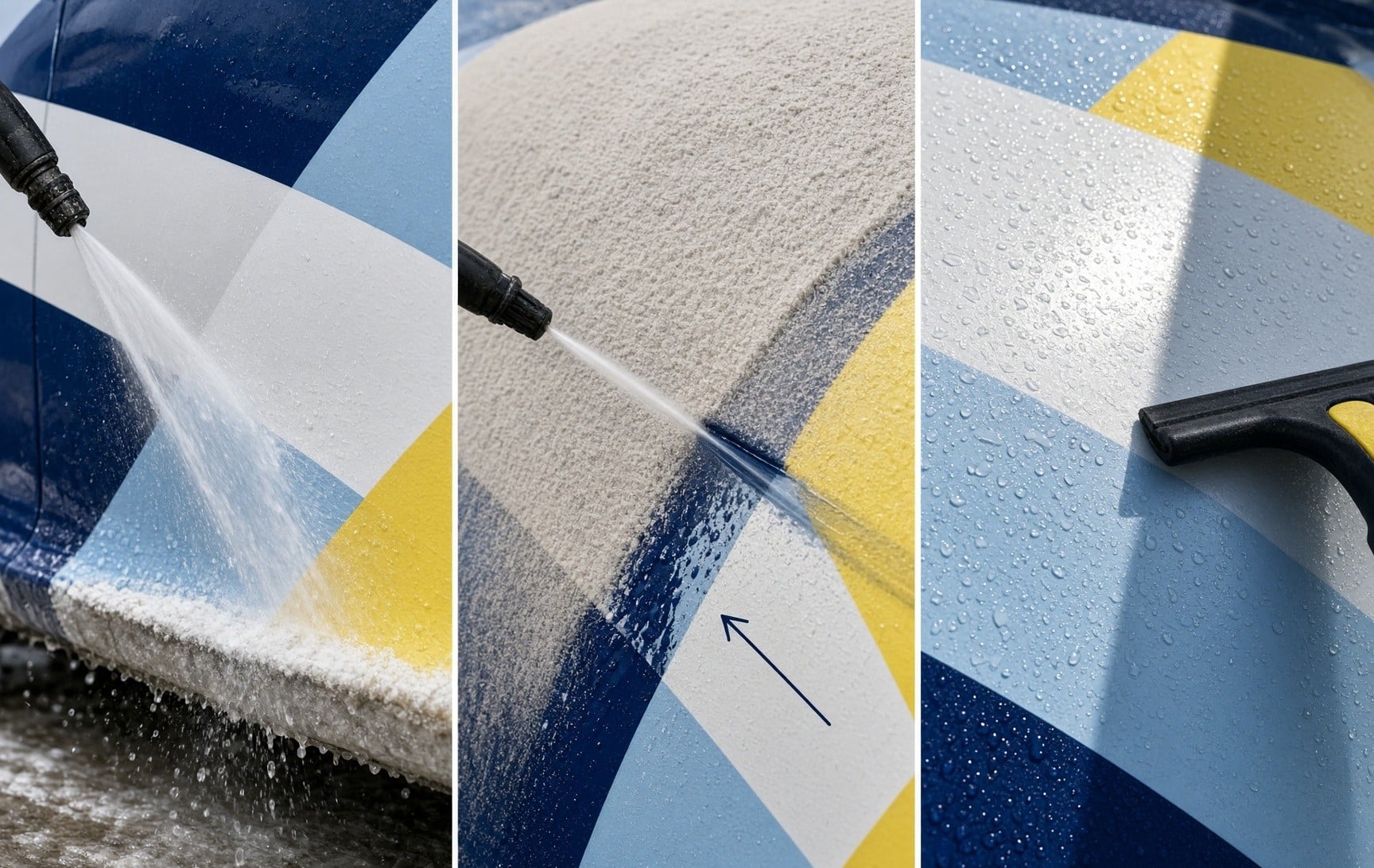
Salt, dust, and heat each require a different habit.
Salt: Road crews in Utah and the Reno area treat winter roads with salt, brine, or a salt-and-sand mix. Rinse the lower panels, wheel arches, and edges more often in winter. 3M says salt comes off with a water rinse and a dry microfiber towel.
Dust: Dust and grit scratch the film when you wipe them in. In Las Vegas, rinse the vehicle thoroughly before the mitt touches it, as 3M advises.
Heat and hard water: Wash in the shade on a cool panel, because sunshine leaves streaks. The Las Vegas Valley Water District classifies its water as very hard, at 280 parts per million, so droplets left to dry leave mineral spots. Both manufacturers ask you to dry the film; when possible, park in shade or under cover.
We wrap vehicles in Las Vegas, Salt Lake City, and Reno, so we work in these three climates every day. Our post on how we build one wrap to survive a Utah winter and a Nevada summer covers the build side.
Should You Wax or Ceramic Coat a Wrap?
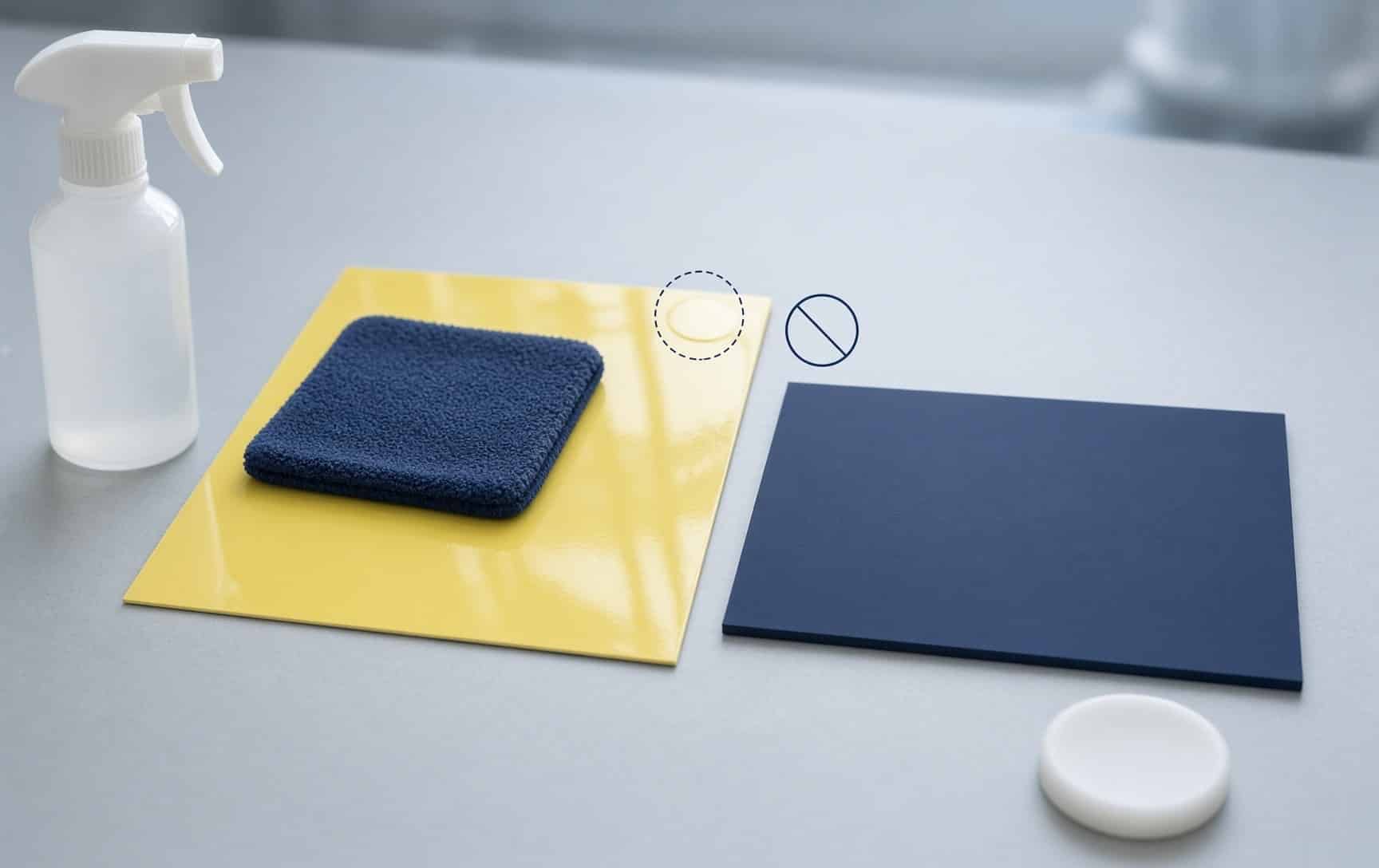
Wax only gloss film, and use the right product. Matte, satin, and textured films get none. Coatings need a conversation with us first.
For gloss film, Avery Dennison accepts a spray wax free of petroleum distillates and abrasives. Remove any residue with an all-purpose cleaner. The car wash wax cycle stays off the list.
Coatings are a separate question. Warranty treatment varies by film maker and by shop, so check with us before anything goes on the wrap. We offer 3M Ceramic Coating as an add-on for new wraps.
How Should a Fleet Handle Vehicle Wrap Maintenance?
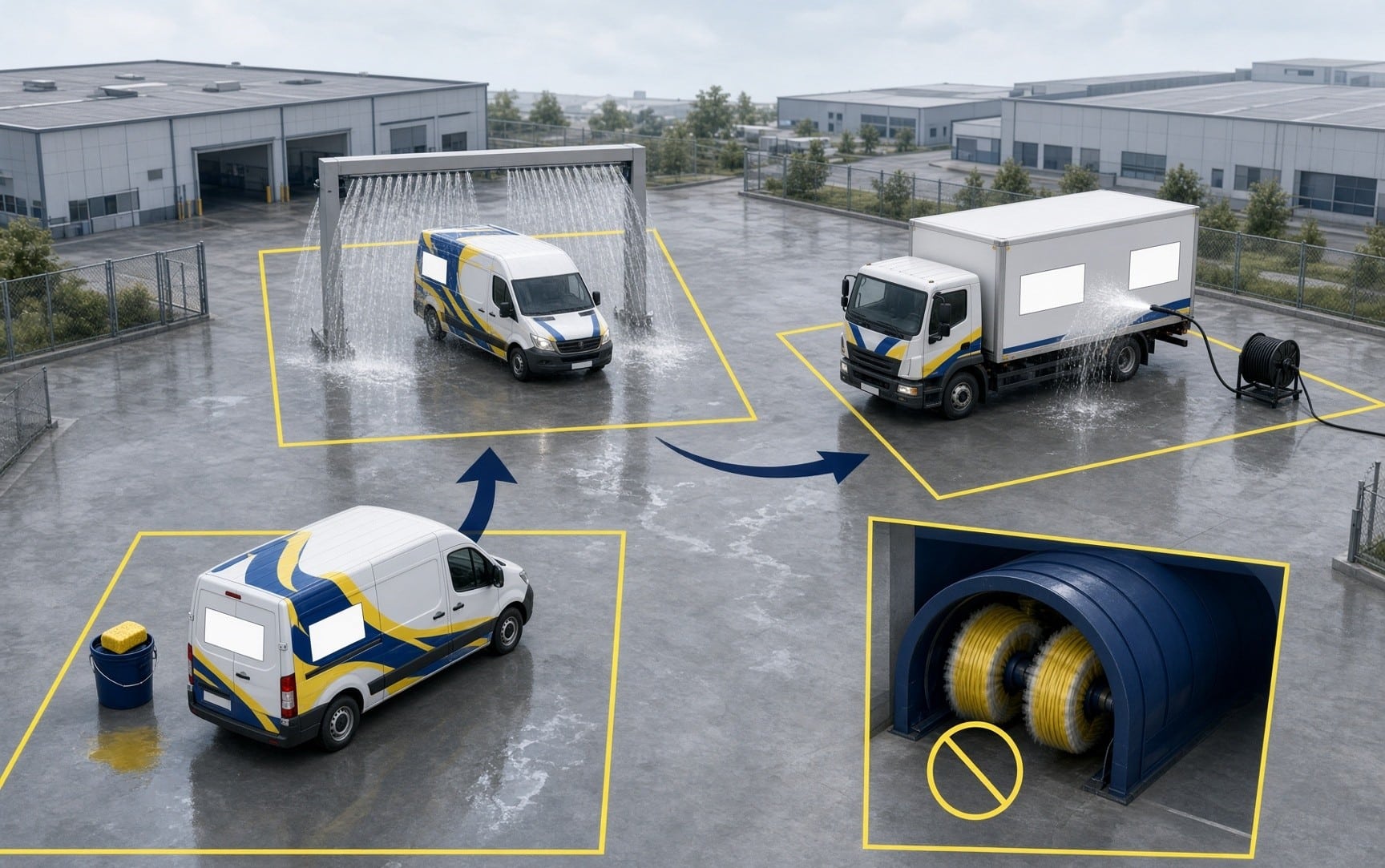
Make it a driver rule everyone follows, with one person owning it, and put it on one page for every driver. Large fleets often cannot hand wash every vehicle, so the rule needs a realistic order:
- Hand wash when possible.
- Use a brushless wash bay as the standard.
- Hire a vendor to pressure wash box trucks and trailers within the limits above.
- Avoid brush tunnels and foam-brush wands.
A vendor needs the numbers in writing: under 1,200 psi, under 180°F, a nozzle 12 inches from the edges, and a 40° fan; no turbo or rotating tips.
A simple routine keeps a fleet matching:
- Wash every two weeks as the baseline, with extra washes after salt, dust, or heavy use.
- Walk each vehicle monthly and photograph any lifting.
- Report lifting within a day, while the repair is still small.
Uneven care makes a fleet drift out of match, and a matching fleet is the point of the wrap.
We have no fleet minimum; we schedule fleet installs to keep vehicles in service, and we can wrap large fleets in phases. One master design applies across the whole fleet. Our commercial fleet wraps page explains how that works. We are 3M- and Avery Dennison-certified, and our installers hold those certifications.
What Is Normal After a Wash, and When Should You Call Us?
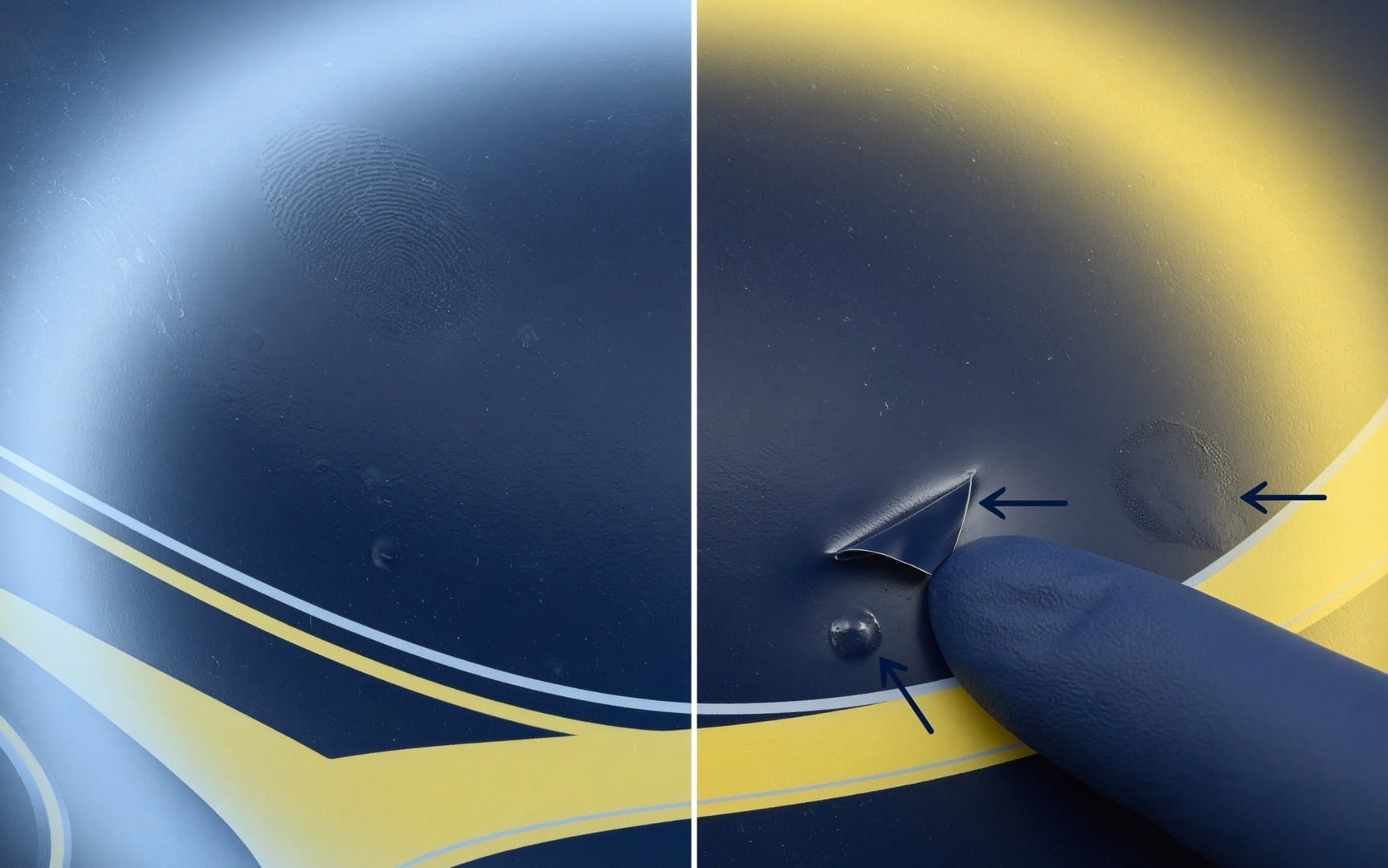
Fingerprints on matte film, water spots that wipe away, and light surface dust are normal. Lifted edges, bubbles that appear or grow after a wash, loss of gloss, discoloration, and cracking are not.
3M advises owners of its protection film to check for edge lifting after washing and to return to the installer for repair. Avery Dennison asks owners to contact the installer immediately about loss of gloss, discoloration, or any decline in the film's appearance. Light surface scratches can fade on their own: 3M says most mild scratches on its 2080 color change film disappear in warm sunlight, while deeper scratches need replacement.
Call us about any of these. Small lifts are easier to fix early. We handle repairs case by case, and each repair is either covered under warranty or quoted.
When a wrap reaches the end of its life, our guide on removing a vehicle wrap covers the process, and our post on whether wrapping a vehicle damages the paint covers what sits underneath.
How Does Washing Affect Your Wrap Warranty?
Every wrap we install carries a 5-year product warranty and a 1-year installation warranty. Improper washing and harsh chemicals are not covered by either. Claims are reviewed case by case.
Avery Dennison warns in its care bulletin that infrequent or incorrect maintenance can shorten a wrap's life. Following this guide keeps your care in line with both manufacturers' recommendations. Our product and installation warranties are explained in plain terms in the lifespan post.
Frequently Asked Questions
How often should you wash a wrapped vehicle?
Avery Dennison recommends washing every two weeks, or whenever the vehicle looks dirty. Winter salt, summer dust, bugs, and sap shorten that gap. Dirt left on the film breaks it down under sun and heat.
Can you use a self-serve car wash bay on a wrapped vehicle?
Use the rinse and soap wand and leave the foam brush alone, because it can carry grit from earlier vehicles. Wand pressure varies from bay to bay, so keep the nozzle at least 12 inches from every edge and aim the stream square to the surface, away from seams.
Can you use a waterless wash or quick detailer on a wrap?
Yes, on a lightly dirty vehicle. Avery Dennison calls waterless wash or spray wax the preferred method in that case. The product should be free of petroleum distillates and abrasives. Matte film needs a cleaner without wax or gloss enhancers.
What soap is safe for a vinyl wrap?
Look for a mild, pH-neutral car wash soap with no abrasives, strong solvents, or alcohol. Avery Dennison's range runs from pH 5 to 9. Rinse thoroughly afterward.
Is it safe to use isopropyl alcohol or household cleaners on a wrap?
Diluted alcohol wipes work for fingerprints and light residue, and both manufacturers publish mixes. Keep the wipe quick, and don't let alcohol sit on the film. A mild all-purpose cleaner, like the ones both manufacturers list, also works. Keep acetone, MEK, toluene, paint thinner, and lacquer thinner off the film.
Can you wash a wrapped vehicle in direct sun or on a hot day?
Better to wait. Wash in the shade on a cool panel, because sunshine leaves streaks. In a Las Vegas summer, early morning or evening works best. Avery Dennison also says never to apply sealant to a hot surface.
Can wrapped box trucks and vans go through a truck wash?
A brushless truck wash bay is fine. A brush-style truck wash follows the same rule as any brush wash, so it is off the list. A vendor can pressure-wash box trucks within the limits above.
Did one trip through a brush wash ruin my wrap?
Manufacturers say brush washes may scratch the film and lift edges, so one trip may leave no mark. Walk the vehicle in daylight and check the edges, seams, and corners for lifting, scratches, and dull spots. Call us about any lifting, because early repairs are easier.
The Bottom Line
Hand wash when you can, and use a touchless wash when you cannot. Skip brush washes, keep pressure washing under 1,200 psi, and dry the film every time. Clean stains as soon as you see them, and tell us early about any lifting.


