
What Makes a Plumbing Van Wrap Actually Bring In Calls
A Faster Decision Than Most Trades Get
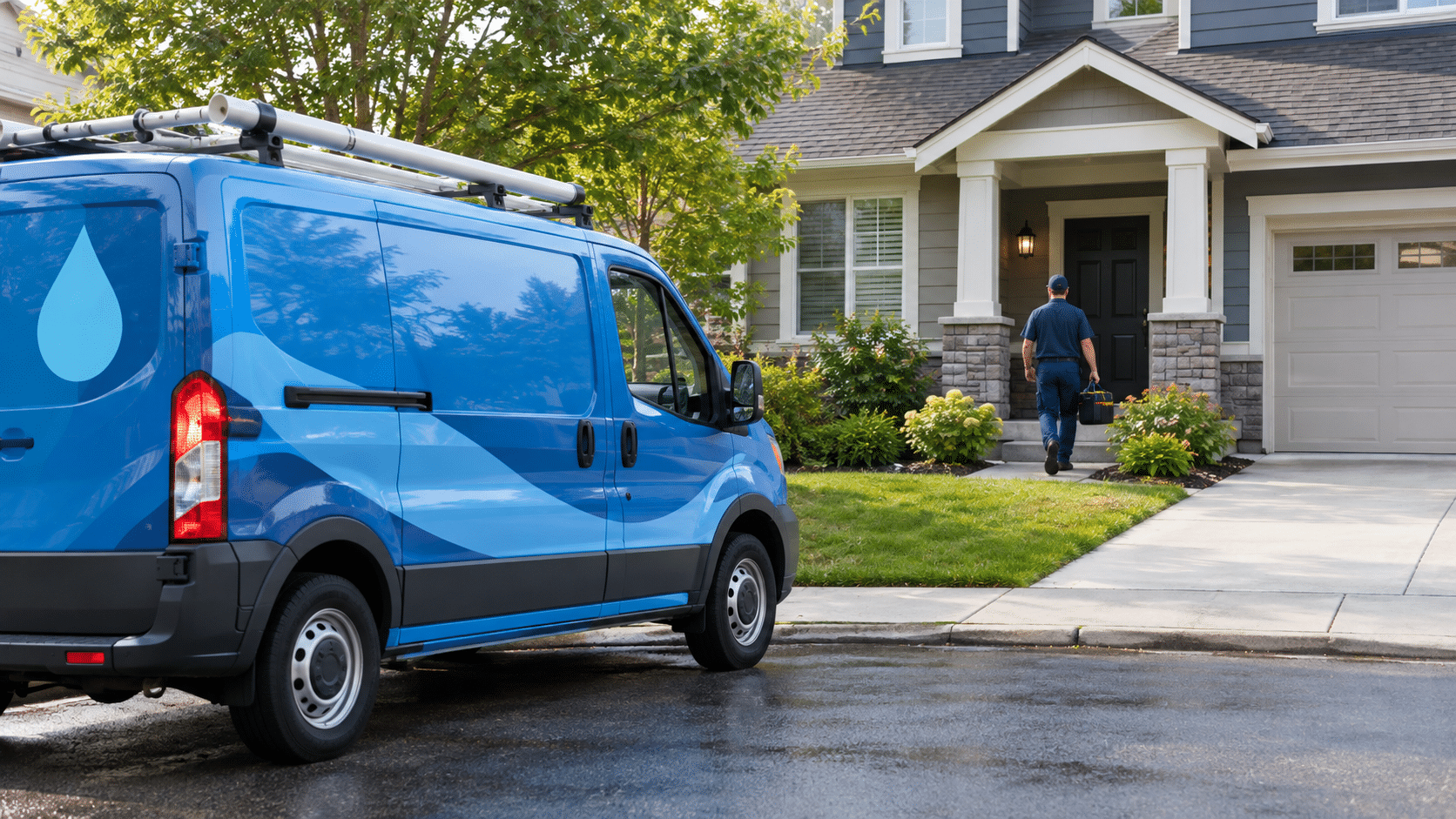
A plumbing van has the same three jobs as any service vehicle: get noticed, communicate the problem it solves, and make the next step effortless. What's different is the clock. A homeowner staring at water on the kitchen floor decides who to call in seconds, not days. To decide who is closer in an emergency than a comparison shop. A wrap that hesitates, or buries the phone number, loses that decision before the plumber even knocks.
That's the real test for a plumbing van wrap: not whether it looks sharp in a design file, but whether it works at the exact moment someone needs an answer fast.
The Design Principles That Actually Hold Up

Readable at a real distance
The sign industry's long-standing rule of thumb, backed by research from the United States Sign Council, is one inch of letter height for roughly every 10 feet of viewing distance. A phone number meant to be read from 20 feet away needs to be at least 2 inches tall, and even larger for drivers rather than people standing still.
High contrast over a nice palette
Dark text on a light panel, or light text on a dark one, reads faster than colors chosen purely for brand appeal. A design that looks great in a file can disappear against pavement and traffic if the contrast is weak.
No script or cursive fonts
They photograph well and read terribly at speed. Clean, bold, sans-serif type does more work for less design effort.
Designed around the actual vehicle
Door seams, handles, and gas caps break up a design in ways a flat mockup doesn't show. A phone number lost behind a window undoes everything else done right.
Phone number on both rear doors and the side panels
A plumbing van often sits parked at the curb outside a house for the length of a service call, not just passing in traffic. Covering both the rear and the sides means the number reads no matter which direction someone's approaching from.
Blue reads as trust, and that's not an accident
It's the most common color choice in plumbing branding for a reason. It reads as clean and water-adjacent without saying a word. It's also why blue anchors the color convention already used on our Plumbing Vehicle Wraps page; keeping the wrap consistent with everything else a customer sees from the business matters more than picking a color in isolation.
Match what's already true about the brand
If the wrap's colors or tone don't match the website or Google Business Profile a customer just searched, it creates a flicker of doubt at exactly the moment trust matters most.
Say when you're available, not just what you do
A homeowner deciding who to call during an active leak responds faster to "Emergency Service, Day or Night" than to another line in a service list. If the business genuinely offers 24/7 or same-day response, that's often more valuable space on the wrap than one more service name.
A short, specific tagline beats a generic one
‘We Fix Leaks Fast’ says more in four words than a polished but vague slogan does in ten. It doesn't need to be clever. It just needs to be specific enough to be remembered the next time a pipe bursts.
Plumbing Van Wrap Ideas: The Mistakes That Quietly Kill Leads

The same plumbing truck wrap ideas apply to a box truck as much as a van. A handful of mistakes show up often enough to call out directly.
Cramming in the whole service list
Plumbing covers drain cleaning, water heaters, repiping, leak detection, sewer lines, and often more. Trying to list it all on one van usually means none of it reads clearly. Pick the two or three services that actually drive calls and let the website carry the rest.
Leaning on generic pipe and wrench clip-art
A stock illustration fills space but rarely tells anyone what makes this specific company worth calling. A clean logo and a clear message do more work than decoration.
Ignoring the vehicle's actual shape
A design approved on a flat mockup can land differently once it's wrapped around a door handle or a side mirror bracket. Reviewing the design against the real vehicle catches this before install.
Sizing a QR code like an afterthought
A code small enough to look tidy but too small to scan from a few feet away defeats the purpose. It needs the same size scrutiny as the phone number.
Leaning entirely on water clichés
Droplets, splashes, and dripping-faucet graphics are common enough in this trade that they've stopped standing out on their own. If the wrap depends on water imagery to say "plumber" instead of a real name and a clear message, it blends into every other van doing the same thing.
What It Actually Costs by Coverage Tier

Plumbing wrap pricing works the same way it does for any service vehicle: coverage decides the price, not a flat number.
A partial wrap, covering the most visible panels, starts at $1,900. A full wrap covers more of the vehicle and costs more. Decals and lettering cost less than either, and work fine for a single van that mainly needs to look professional rather than carry the full advertising load.
There's no universal right tier. A single residential van might do fine with a partial wrap. The first vehicle in a growing fleet usually earns more from a full wrap, since it's doing more of the advertising work. See our Commercial Van Wraps page for van-specific pricing, or Commercial Truck Wraps if a box truck is part of the fleet.
What a Wrap Can Realistically Bring In, Parked at a Job Site All Day

A plumbing van parked outside a house for the length of a service call is still visible to everyone on that street the whole time. Our Vehicle Wrap Advertising Cost post covers the full math on what that's worth (cost per impression, compared against paid ad formats). Short version: a wrap is a one-time production cost, not a recurring bill, and it keeps working for as long as the van's on the road.
Designing for Consistency Once You're Wrapping More Than One Vehicle

A single van can get away with being a one-off design decision. A fleet can't.
Plumbing companies that add vehicles over a few years often end up with each one wrapped a little differently, and the fleet stops reading as one business. The fix is to build one design system before you wrap the second vehicle: consistent colors, consistent phone number placement, and consistent logo position. Adjust these only for what each vehicle actually does: residential, commercial, or emergency response.
See our Plumbing Vehicle Wraps page for how that breaks down by sub-vertical, or Commercial Fleet Wraps for how pricing and staged rollouts work as the fleet grows.
The Bottom Line
None of this is complicated, which is part of why it's easy to get wrong. Readability and a real identity matter more than decoration. Coverage tier should match how much advertising work the vehicle is actually doing. Once there's more than one vehicle, consistency matters more than any single design.
Get those right, and the wrap does its actual job: turning a moment of urgency into a name someone already trusts before they dial the number.
FAQ
What size should the phone number be on a plumbing van wrap?
The sign industry's standard rule of thumb is one inch of letter height per roughly 10 feet of viewing distance, so a number meant to read from 20 feet away needs to be at least 2 inches tall. Go bigger if someone needs to read it while driving past rather than standing still.
Should I get a full wrap or partial wrap for one van?
A full wrap makes sense if that van is effectively the business's main moving billboard, or the first vehicle in a fleet that will grow. A partial wrap, starting at $1,900, covers the most visible panels and works well for a single service vehicle that mainly needs to look professional.
Do QR codes work on a plumbing van wrap?
Yes, as long as they're sized for scanning. They should be small enough to look tidy, but not so small that they can't be read from a few feet away. Treat a QR code's size with the same care as the phone number.
What's the single biggest design mistake plumbing companies make?
Cramming too much onto one van: the full service list, several trust badges, and generic pipe or wrench clip-art all competing for the same few seconds. A wrap that says two or three things clearly outperforms one that tries to say everything.
How do I keep a growing fleet looking consistent?
Build the design system once, before you wrap the second vehicle. Use the same colors, logo placement, and phone number position across every vehicle, adjusted only for what each one actually does. Wrapping each new vehicle separately, without that system already in place, is how a fleet ends up looking like several different companies.
Does Nevada require a license number on my plumbing van?
Yes. Nevada state law (NRS 624.720) requires licensed contractors, plumbers included, to display their license number on any commercial vehicle used for business. We build that placement into the wrap design for Nevada clients, not as an afterthought.


